Wood Deck Replacement
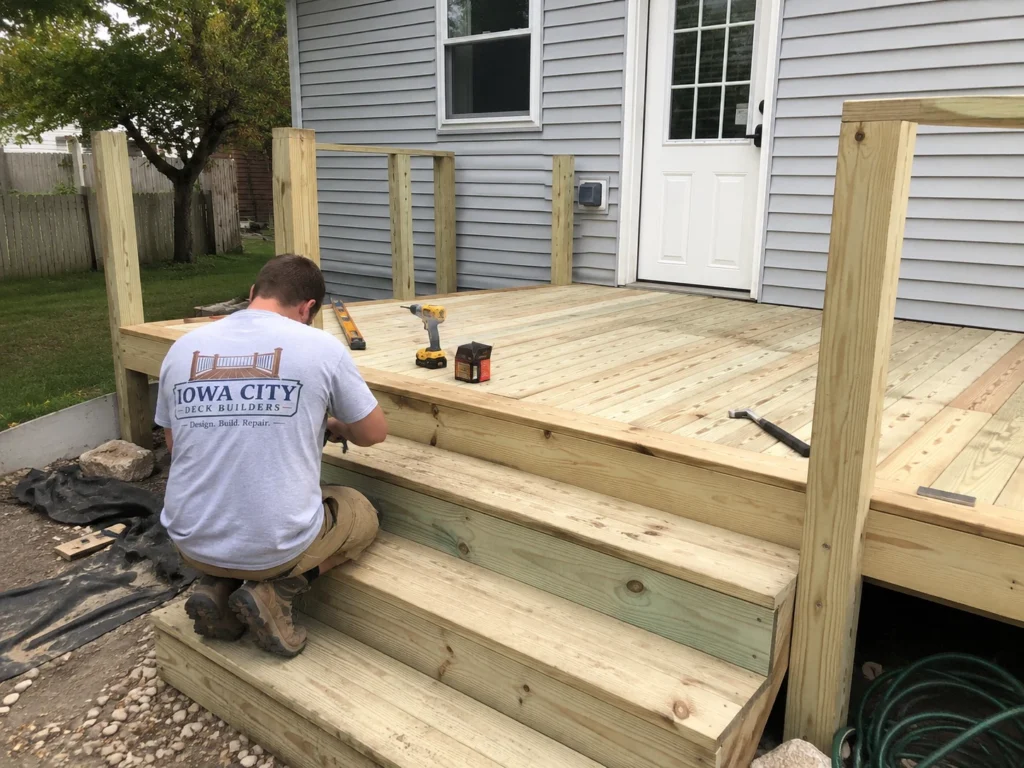
Replace an old or rotted wood deck with new pressure-treated lumber or another appropriate wood decking option while rebuilding the framing, stairs, railings, and visible details that need to change.

When an existing deck has widespread deterioration, structural movement, repeated repair needs, or a layout that no longer works, a complete deck replacement can be the cleanest long-term solution. We remove the old deck and rebuild the structure, surface, stairs, railings, and access as one coordinated project.
Clear replacement scope • Wood and composite options • Complete tear-off and rebuild planning
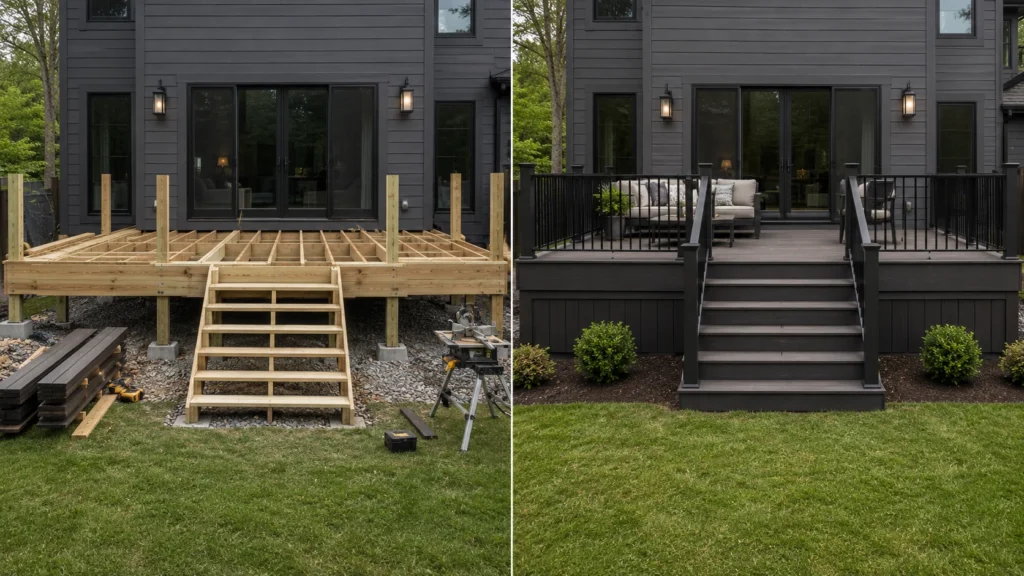
A few damaged boards or one loose railing may be repairable. Full replacement becomes more practical when the decking, stairs, railings, framing, supports, or house connection are aging together and new problems continue to appear in different parts of the deck.
Replacing the complete deck also creates an opportunity to improve the footprint, stair location, yard access, furniture space, drainage, and maintenance plan instead of rebuilding the same limitations into the new structure.
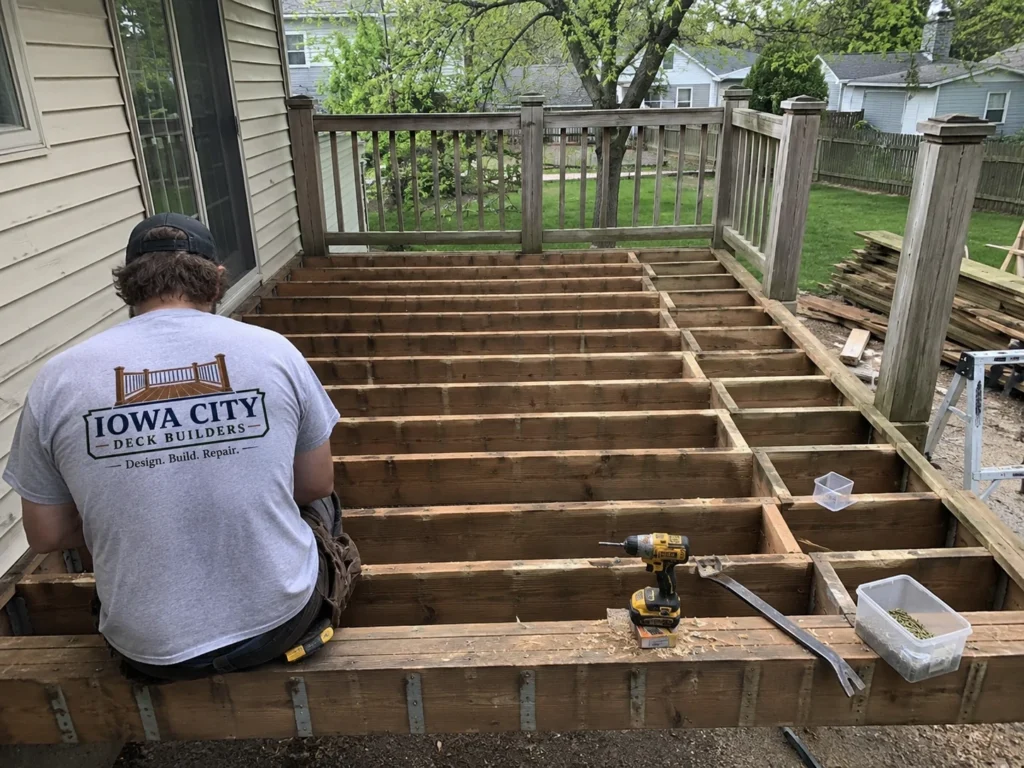
Deck replacement is defined by removing and rebuilding the existing structure. The new surface can be wood or composite, and the rebuilt deck can keep a familiar footprint or solve the problems that made the old deck frustrating to use.
Replace an old or rotted wood deck with new pressure-treated lumber or another appropriate wood decking option while rebuilding the framing, stairs, railings, and visible details that need to change.
Rebuild an existing deck with composite decking when lower maintenance, consistent color, and reduced staining or sealing are priorities for the new structure.
A full tear-off makes it possible to plan the new framing, joist spacing, fasteners, fascia, stairs, and railings around the selected composite system instead of treating the new boards as a surface-only upgrade.
Adjust deck size, stair direction, landings, gates, seating zones, grilling space, and yard access so the replacement deck works better for the home and the way the outdoor space is used.
The visible deck boards are only one part of a replacement project. Demolition exposes the conditions that determine how the new deck should be supported, connected, drained, and finished.
Review how the old deck was attached and protect the rebuilt connection from water entry and movement.
Coordinate the structural support system with the replacement footprint, height, loads, and selected decking material.
Rebuild access and guard systems as part of the complete project rather than attaching new components to unreliable work.
Address water paths, soil contact, ventilation, and access beneath the deck that can affect long-term performance.
Allow the final scope to account for deterioration, fastener corrosion, or improvised repairs that become visible only after removal.
Wood and composite deck replacement begin with the same condition: the existing deck is being removed and the complete structure is being rebuilt. Material selection then shapes the appearance, maintenance needs, details, and final budget direction.
A new wood replacement deck can offer a familiar appearance and a practical upfront material direction, with future cleaning, staining, and sealing included in the ownership plan. A composite replacement deck can reduce recurring surface maintenance while requiring careful coordination of framing, spacing, fastening, fascia, stairs, and railings.
The best replacement material depends on budget direction, appearance, sun exposure, heat, traction, maintenance expectations, and how long the homeowner expects to use the property—not simply which product is marketed as the most premium.
Use a full rebuild when deterioration extends beyond isolated boards and the supporting structure should not remain.
Coordinate pressure-treated or other wood decking with new framing, stairs, railings, and a realistic maintenance plan.
Plan a complete composite replacement around the selected board system, compatible framing, hidden or face fasteners, and finished edges.
Switch from wood to composite—or choose new wood—without confusing a full structural replacement with surface-only deck resurfacing.
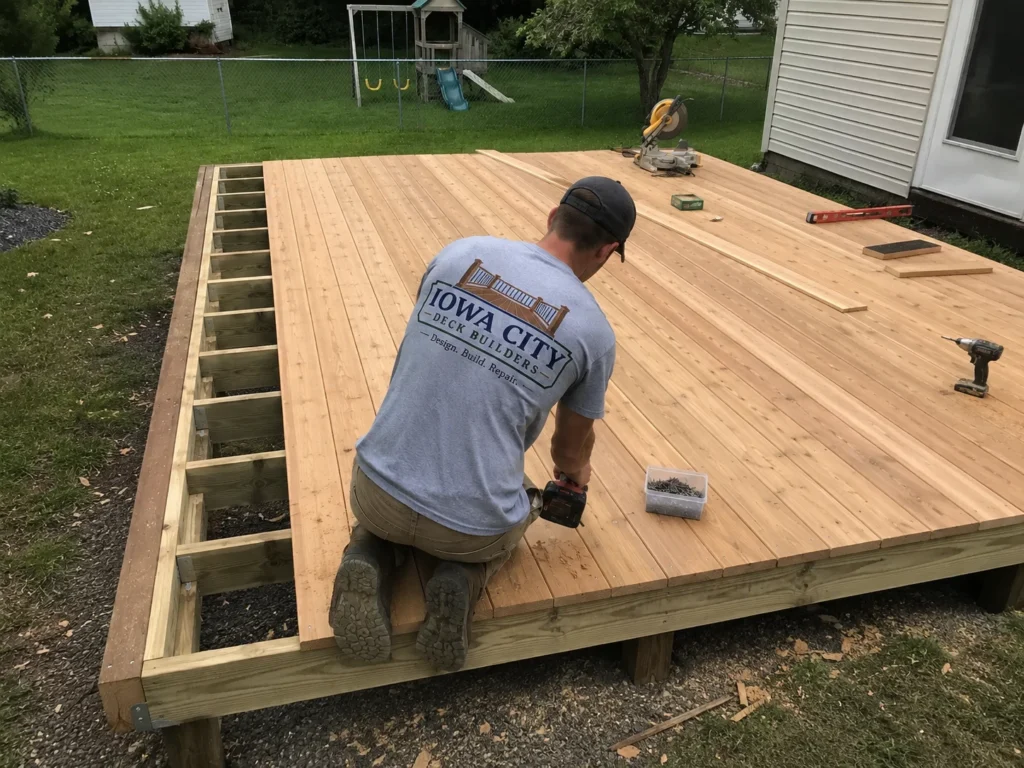
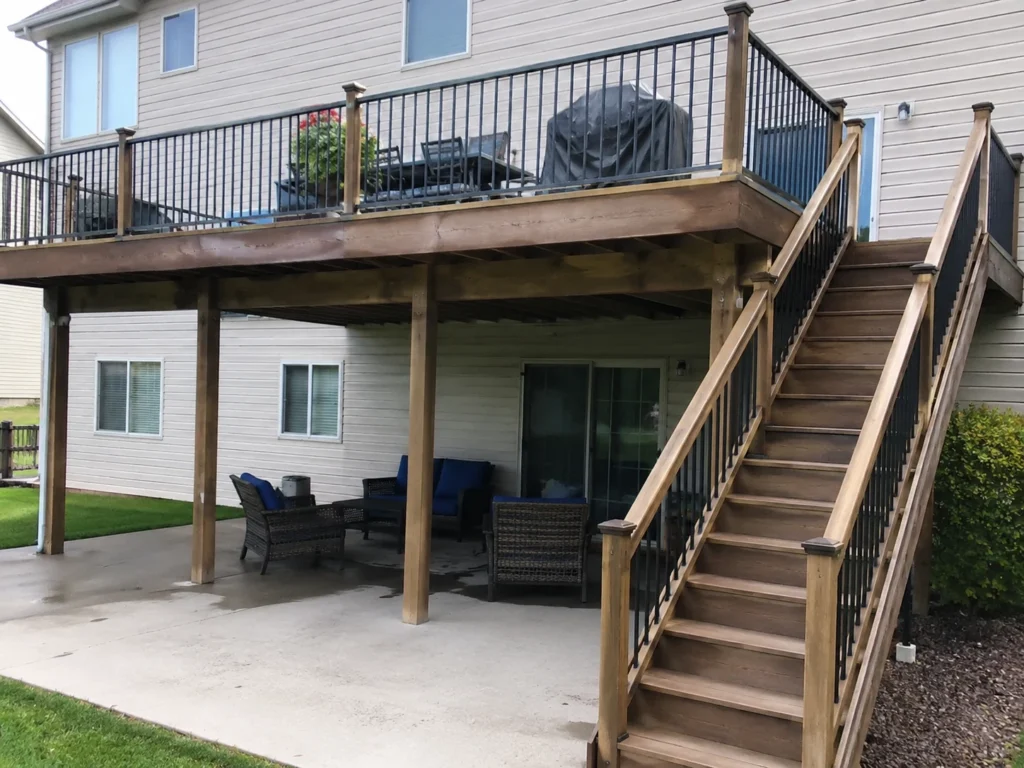
A replacement project includes demolition, structural work, stairs, railings, decking, and the finished outdoor space. These images show different parts of that complete scope.
Use our interactive service map to explore approximate coverage for new deck construction, wood decks, composite decks, repair, replacement, resurfacing, stairs, railings, and related deck services throughout the Iowa City area.
We replace old wood and composite decks for homeowners in Iowa City and nearby Eastern Iowa communities.
Replacement may be the better direction when deterioration, movement, unsafe access, or repeated failures affect multiple parts of the deck. A focused repair is more appropriate when the problem is limited and the surrounding structure remains dependable.
Yes. A full wood deck replacement can rebuild the structure with new wood framing, decking, stairs, railings, and finish details while improving the layout or access where needed.
Yes. Complete replacement is often a practical time to switch from wood to composite because the framing, joist spacing, fasteners, fascia, stairs, and railings can be planned around the selected composite system.
A complete replacement scope should account for removing the existing deck, handling debris, reviewing exposed conditions, and rebuilding the new structure. The exact demolition and disposal details should be confirmed in the estimate.
Demolition can expose damage that was not visible during the initial review. A clear replacement estimate should explain how hidden conditions will be documented and handled if they affect the planned scope.
Resurfacing may work when the frame, connections, supports, and overall layout are suitable to keep. Replacement is more appropriate when the complete structure should come down or the homeowner wants a substantially different rebuilt deck.
Tell us what is failing, what you want to change, and whether you are considering wood, composite, or both. We will help define a complete replacement scope and estimate path.