Deck building, repair and replacement in the Iowa City area 319-423-9635 Get Free Estimate
Licensed Fully Insured References
Licensed Fully Insured Free Written Estimates
Residential Deck Repair

Deck Repair in the Iowa City Area

From a few damaged boards to sagging framing, a deck pulling away from the house, rotted wood, settling supports, or water damage, we help Iowa City-area homeowners repair the problems affecting safety, stability, and everyday use.

  • Surface, stair, railing, framing, ledger, post, beam, and footing repairs
  • Rot and water-damage repairs that address the source—not only the visible symptom
  • Straightforward guidance on when to repair, resurface, or replace

Clear written estimates • Repair-first recommendations • Wood and composite deck experience

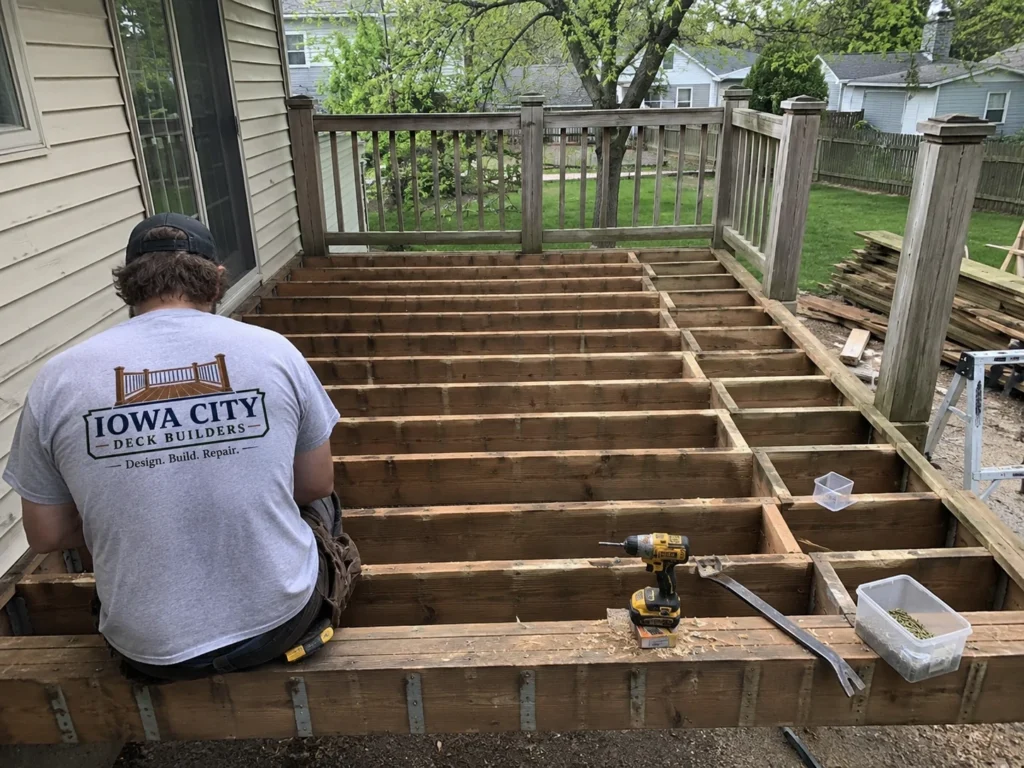
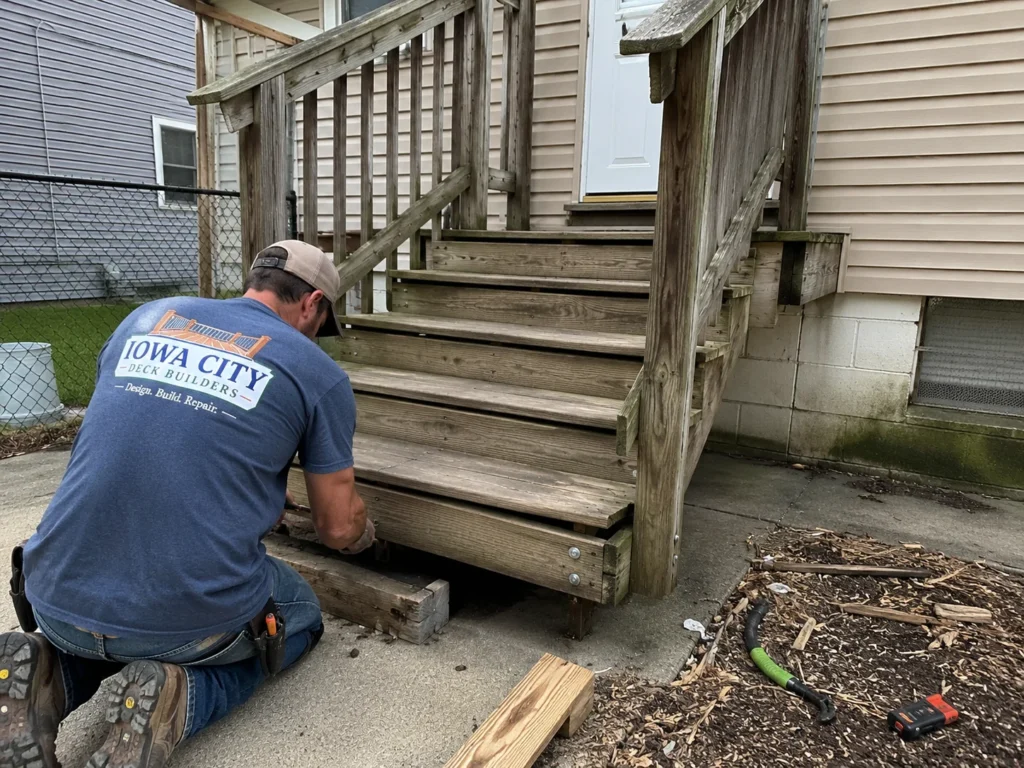
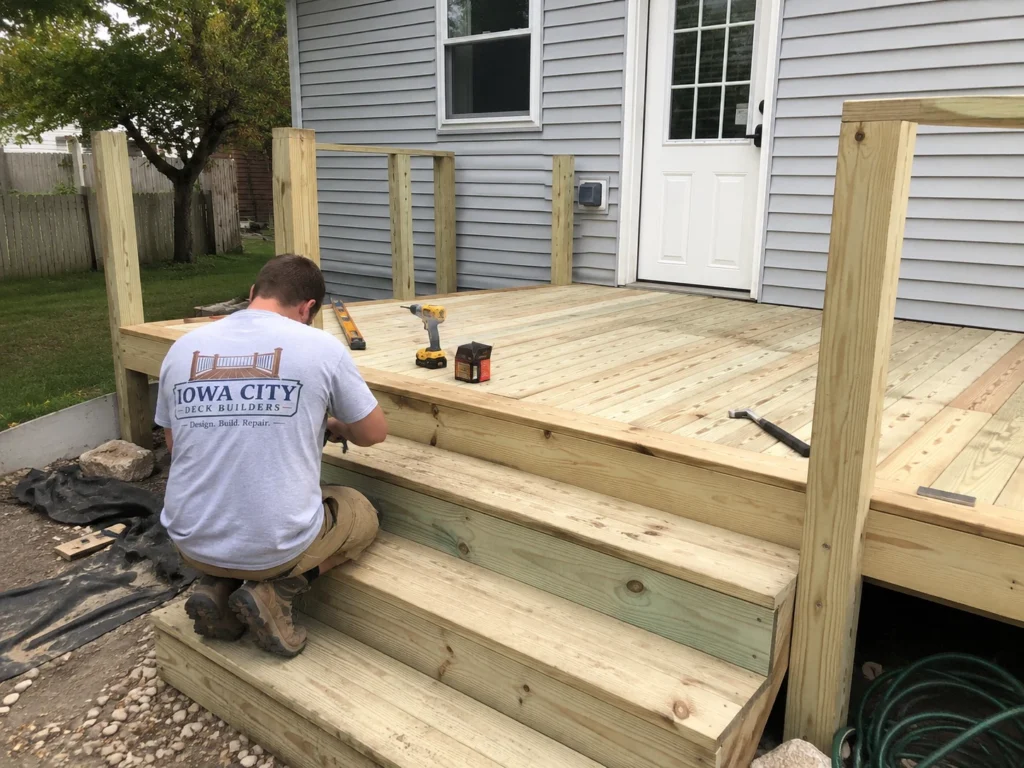
Worker repairing deck stairs and landing on a residential deck project in Iowa City, Iowa.
Jobsite photoJobsite view of a worker repairing deck stairs and landing during a residential deck project in Iowa City, Iowa.
Deck Repair Warning Signs

Start With What You Can See, Hear, and Feel

Homeowners usually notice the symptom before the component causing it. A soft board, moving stair, wobbly railing, sagging corner, gap near the house, or leaning post can point to a focused repair—or to a larger condition hidden below the surface.

You do not need to diagnose the deck before requesting an estimate. Tell us what is happening and where you notice it. The repair scope can then separate localized damage from surface-wide wear, structural movement, moisture problems, and full replacement conditions.

  • Soft, cracked, splintered, cupped, or loose deck boards
  • Bounce, sagging, uneven areas, or movement underfoot
  • Loose railings, unstable stairs, damaged treads, or weak landings
  • A deck pulling away from the house or a visible gap at the ledger
  • Leaning posts, settling supports, or movement near footings
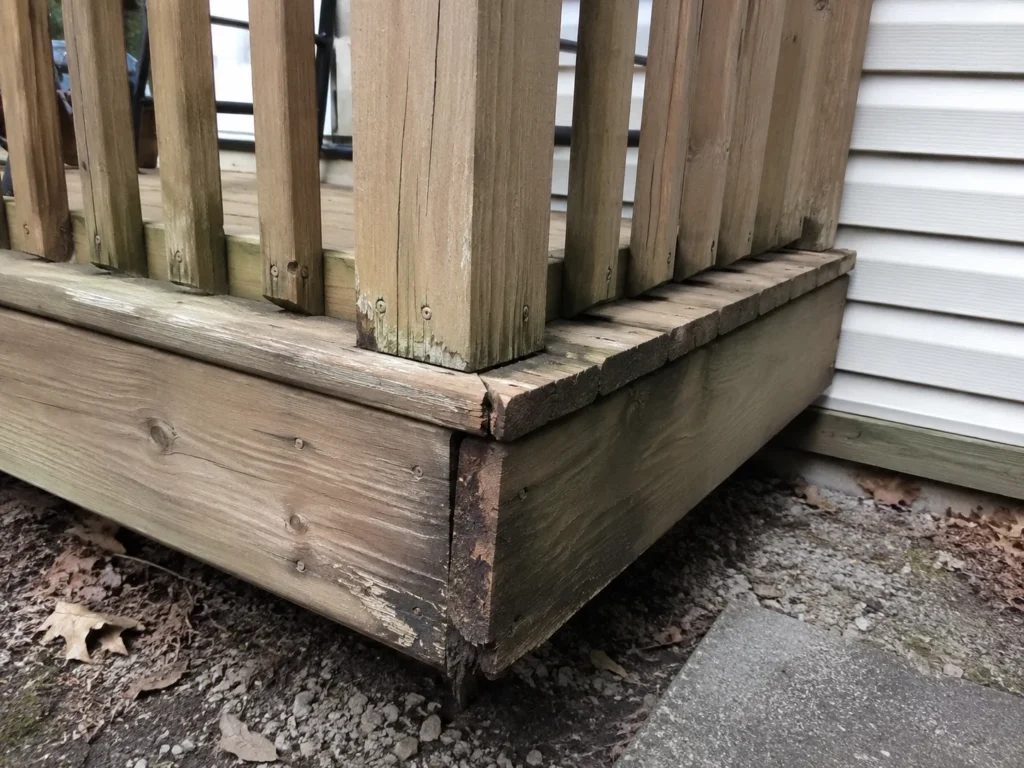
  • Dark staining, soft framing, peeling material, or visible wood rot
  • Water collecting near the house, posts, stairs, or under the deck
  • Inspection findings or visible concerns before selling a home
Complete Deck Repair Services

Repair the Damaged Parts Without Losing Sight of the Whole Deck

Deck problems are often noticed as symptoms—a soft board, loose railing, sagging area, movement, moisture, or an unstable stair. The categories below cover the most common repairs we evaluate when the existing deck may still be worth preserving.

Deck Board and Surface Repairs

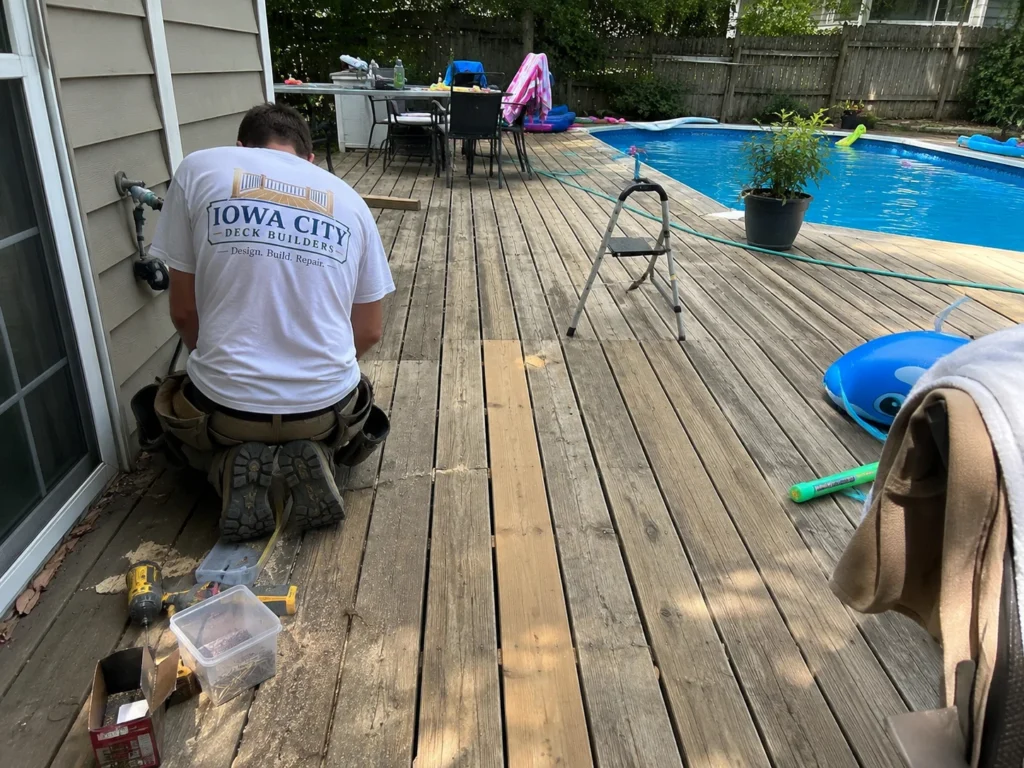
Replace isolated soft, split, broken, cupped, splintered, or loose wood and composite deck boards. We also review fasteners, joist contact, spacing, drainage, and nearby boards so a localized deck board repair does not hide a larger resurfacing need.

Deck board replacement • Damaged deck boards • Soft deck boards • Partial surface repair

Joist, Beam, Post, and Framing Repairs

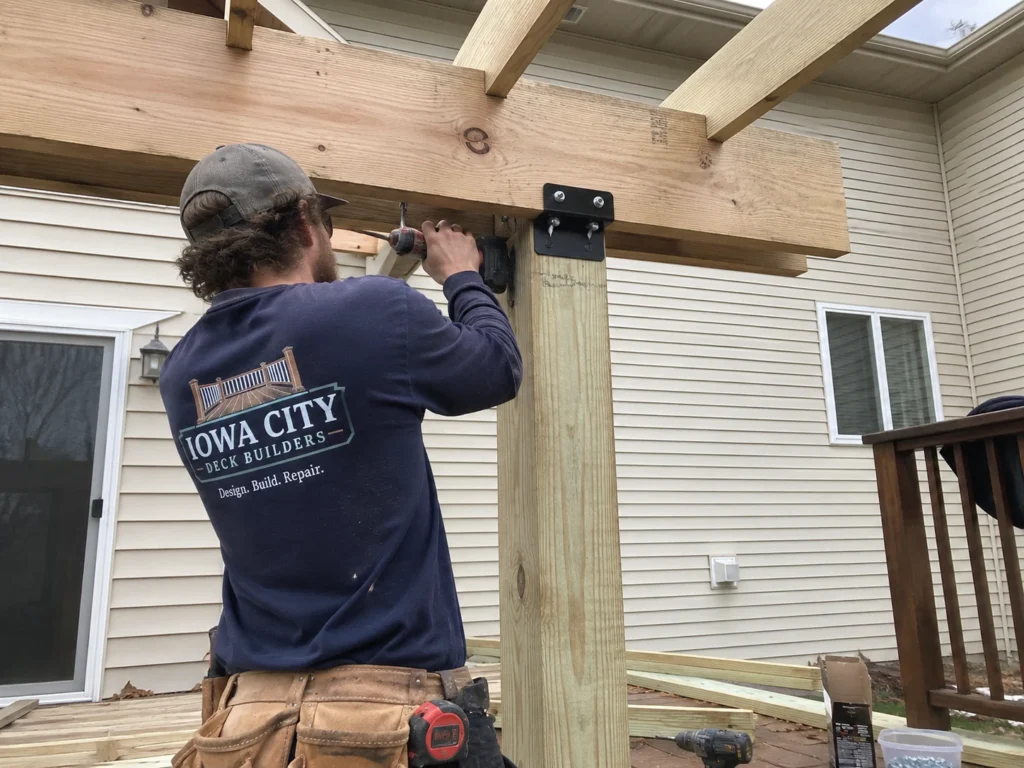
Repair damaged joists, sagging beams, deteriorated posts, weak framing connections, and defined structural support problems. When several framing members or support points are involved, a broader structural evaluation may be needed before the repair scope is finalized.

Deck joist repair • Deck beam repair • Deck post repair • Sagging deck repair

Ledger Board and House-Connection Repairs

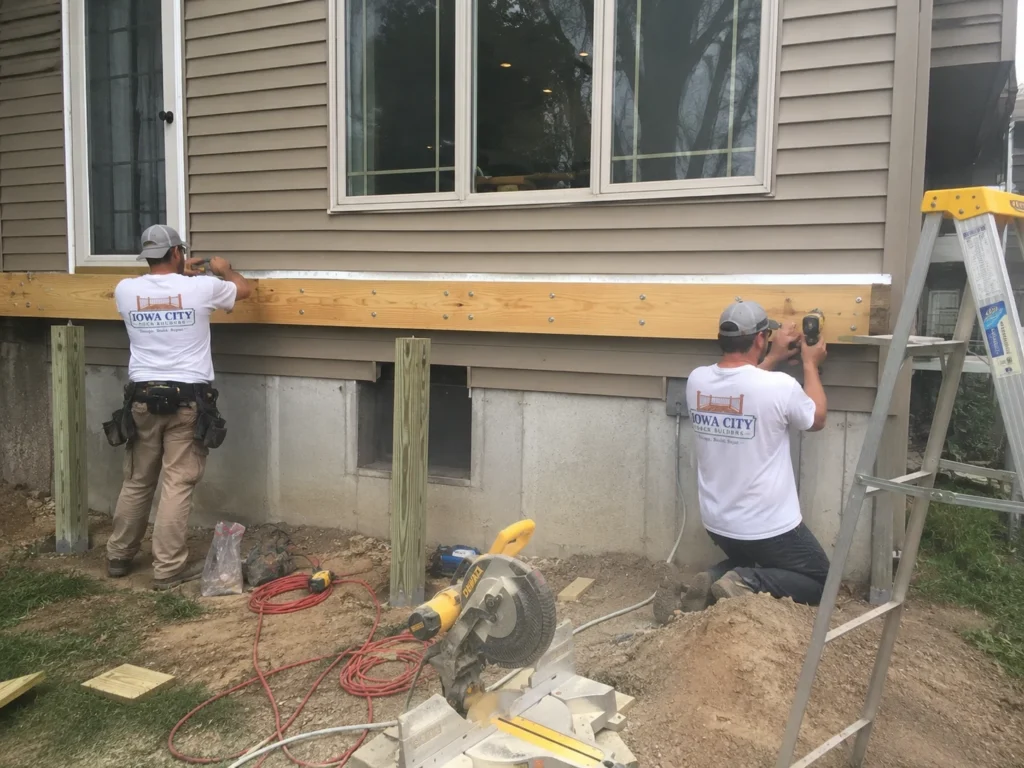
Address decks pulling away from the house, visible gaps, loose attachment, corroded fasteners, ledger board damage, and moisture around flashing or door transitions. The repair should restore the connection and correct the water path or fastening issue that caused it.

Ledger board repair • Deck pulling away from house • Deck attachment repair • Ledger flashing concerns

Footing, Support, and Settling Repairs

Evaluate settling deck footings, sinking posts, uneven support, frost-related movement, leaning columns, and sagging areas tied to the support system. Repairs may include rebuilding a defined support point, correcting connections, or replacing deteriorated components.

Deck footing repair • Sinking deck post repair • Settling deck repair • Uneven deck support

Rotted Deck and Water-Damage Repairs

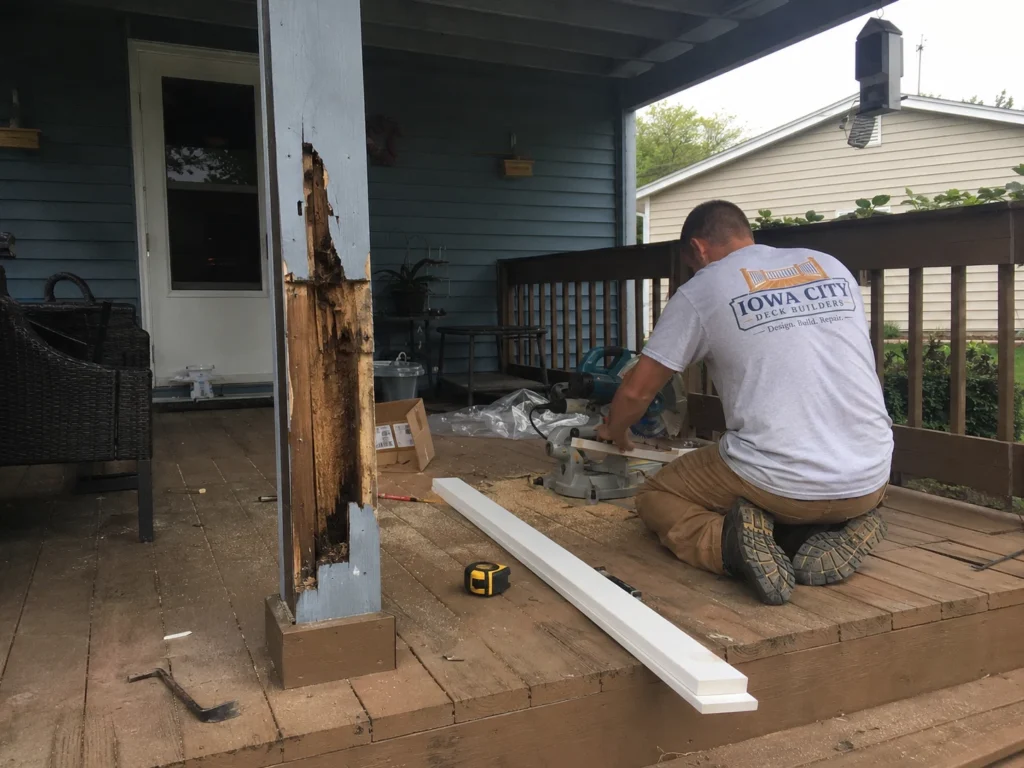
Remove confirmed decay and repair moisture-damaged boards, framing, stairs, railings, posts, or ledger areas after tracing the source. Drainage, airflow, flashing, debris, grade, and repeated wetting all matter when preventing the same damage from returning.

Rotted deck repair • Deck water damage repair • Wood rot repair • Moisture-damaged deck framing

Deck Stair, Landing, and Railing Repairs

Repair loose treads, deteriorated stringers, unstable landings, wobbly railing posts, damaged rails, and unsafe transitions. When both the stairs and railing system need major work, planning them together can improve support, transitions, and everyday access.

Deck stair repair • Deck railing repair • Landing repair • Loose railing repair Explore stairs and railings
Unsure What Failed?

You Do Not Need the Technical Name to Request a Repair Estimate

Describe the movement, damage, soft area, loose component, moisture, or safety concern you notice. We can evaluate the affected area and explain whether the practical next step is repair, resurfacing, structural work, or replacement.

Structural Deck Repair

Support Problems Can Show Up as Bounce, Sagging, Separation, or Uneven Areas

Deck framing repair can involve joists, beams, posts, blocking, bracing, hangers, fasteners, the ledger connection, or the supports below the deck. The visible symptom does not always identify the member causing it, so the surrounding load path should be reviewed before repairs begin.

A focused component repair may be appropriate when the damage is defined and the remaining structure is dependable. When several structural systems are failing together, broader structural reconstruction or complete deck replacement may provide the more dependable long-term solution.

  • Deck joist repair for split, rotted, damaged, or poorly supported members
  • Deck beam repair for sagging, damaged, or inadequately supported beams
  • Deck post repair or replacement where supports are deteriorated or unstable
  • Ledger board and house-connection repair for separation, moisture, or fastener concerns
  • Deck footing and settling repairs tied to movement, leaning, or uneven support
  • Framing reinforcement around stairs, openings, additions, and concentrated loads
Rot and Water-Damage Repair

Replace the Damaged Wood—Then Correct Why It Stayed Wet

Rotted deck repair and water-damage repair should address more than soft material. Repeated moisture can enter around the ledger, collect near posts and stairs, remain trapped between boards, or persist where shade, debris, poor airflow, grade, and drainage slow drying.

The repair scope should trace the water path before damaged boards, framing, posts, stairs, railings, or connection details are rebuilt. That protects the new work from being installed over an active moisture problem.

  • Soft or decayed wood at board ends, stair stringers, posts, or framing
  • Water staining or deterioration near the house-side deck connection
  • Debris and tight spaces trapping moisture between boards and joists
  • Poor drainage, splashback, grade, or standing water around supports
  • Corroded fasteners and connectors in repeatedly wet areas
  • Low-airflow or shaded areas that remain damp after surrounding surfaces dry
Repair, Resurface, or Replace?

Match the Scope to the Condition of the Existing Deck

The right project is not determined by one damaged board or one worn surface. The amount of affected material, the condition of the frame, and the usefulness of the current layout all shape the recommendation.

Deck Repair

Best for localized board damage, defined framing or support problems, loose components, ledger concerns, rot, moisture damage, or several repair items on a deck that remains worth keeping.

  • The damage is limited or repairable
  • Most of the structure remains dependable
  • The existing size and layout still work
Current option: Deck Repair

Deck Resurfacing

Best when most or all visible deck boards are worn, damaged, or being converted from wood to composite while the framing and support system remain suitable for continued use.

  • Most surface boards need replacement
  • The frame is suitable to keep
  • The main layout remains useful
Explore deck resurfacing

Deck Replacement

Best when deterioration is widespread, several structural systems are failing, the deck is unreliable, or a complete tear-off and rebuild would solve safety, layout, access, and material problems together.

  • Damage affects much of the structure
  • Repairs would be temporary or fragmented
  • A new layout or complete rebuild adds better value
Explore deck replacement
Deck Repair Before Selling

Address Visible Deck Concerns Before Buyer Walkthroughs and Home Inspections

Pre-listing deck repair can focus on visible safety and condition concerns that may distract buyers or appear in an inspection report: loose railings, damaged stairs, soft boards, obvious rot, unstable components, or unfinished repair areas.

The goal is not to promise a sale result or guarantee an inspection outcome. It is to complete practical repairs, document what was addressed, and avoid leaving clear deck problems for the final weeks of the transaction.

  • Loose railings, damaged stairs, and visible trip hazards
  • Soft, cracked, or broken deck boards
  • Obvious rot, water damage, and deteriorated trim or fascia
  • Repair items identified during a pre-listing walkthrough or inspection
  • Clear written estimate for the repair scope before scheduling the work
Local Deck Repair Service

Deck Repair Across Iowa City and Nearby Eastern Iowa Communities

We repair residential decks throughout Iowa City and the surrounding service area, from focused board and railing repairs to framing, ledger, support, rot, and water-damage projects.

Deck Repair Questions

Frequently Asked Questions About Deck Repair

Can a rotted deck be repaired?

Yes, when the decay is limited and the surrounding structure remains dependable. Rotted boards, stair parts, railing posts, joists, beams, posts, or ledger areas may be repairable after the extent of decay and the moisture source are identified. Widespread structural rot may make replacement the better investment.

Why is my deck pulling away from the house?

Visible separation can involve the ledger board, fasteners, flashing, the home’s rim or band joist, moisture damage, or movement in the deck supports. The connection and surrounding structure should be evaluated before the gap grows or surface repairs cover the problem.

Can damaged deck joists, beams, or posts be repaired?

Often, yes. Defined joist, beam, or post damage may be repaired or the affected member replaced when the remaining structure and load path are suitable. Several failing structural systems may require a broader structural repair plan or complete replacement.

Can you replace only a few damaged deck boards?

Yes. Localized deck board replacement is appropriate when only a limited number of boards are soft, split, broken, cupped, or unsafe. If most of the surface is worn or failing while the frame remains usable, deck resurfacing may be the more complete solution.

How do I know whether to repair, resurface, or replace my deck?

Repair fits localized damage on a deck worth keeping. Resurfacing fits decks where most surface boards need replacement but the frame remains suitable. Replacement fits widespread deterioration, unreliable structure, recurring failures, or a layout that no longer works.

Can a settling deck footing or sinking post be repaired?

Sometimes. The repair depends on the existing footing, soil movement, frost effects, post condition, beam connection, access, and how the surrounding deck is supported. The affected area should be evaluated before deciding whether one support can be corrected or a larger rebuild is needed.

Can water-damaged deck framing be saved?

It depends on how far the moisture damage extends and whether the water source can be corrected. Some boards or framing members can be replaced, while widespread decay near the ledger, posts, beams, or joists may require more extensive work.

Should I repair my deck before selling my home?

Practical repairs can address visible safety and condition concerns before buyer walkthroughs or inspections. Loose railings, damaged stairs, soft boards, obvious rot, and unfinished repair areas are common priorities. No repair can guarantee a sale or inspection result.

Can deck stairs and railings be repaired at the same time?

Yes. Coordinating stair and railing repairs can improve support, transitions, handrails, guardrails, landings, and access as one project. Complete combined rebuilds can also be planned as one coordinated stair-and-railing project.

What should I include in a deck repair estimate request?

Describe what you notice, where the problem is located, whether the deck moves or feels soft, and what you want to improve. Exact technical terms are not required. The project address or city and a reliable phone or email are enough to start.

Request a Written Deck Repair Estimate

Concerned About the Condition of Your Deck?

Tell us what you are seeing, where the problem is located, and how the deck feels when used. We will help identify a practical repair direction and prepare a clear estimate for the work.

Call Text