Wood Deck Resurfacing
Replace most or all worn deck boards with new wood decking while retaining suitable framing. This can renew the walking surface and appearance while keeping future cleaning, staining, and sealing in the maintenance plan.

Deck resurfacing replaces most or all of the worn decking while keeping an existing frame that is structurally suitable for continued use. Homeowners can resurface with new wood boards, upgrade from wood to composite decking, and coordinate stairs, railings, fascia, and visible details without automatically rebuilding the entire deck.
Frame-first evaluation • Wood and composite options • Surface renewal without unnecessary tear-off
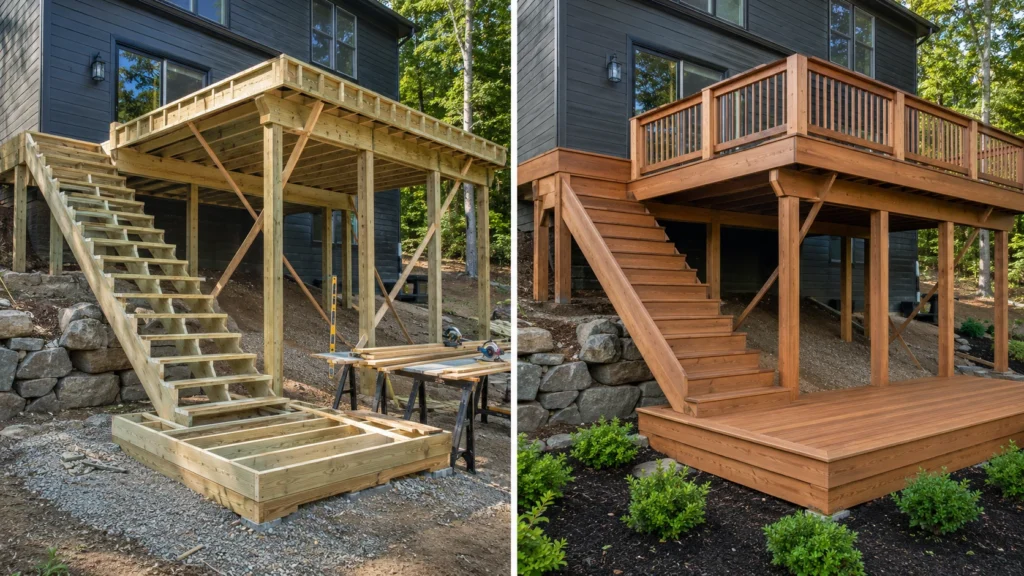
A deck can look tired, splintered, faded, cracked, or difficult to maintain while the framing underneath remains usable. When joists, beams, posts, footings, ledger attachment, and the overall layout are still suitable, deck resurfacing may renew the visible surface without the cost and disruption of a complete structural rebuild.
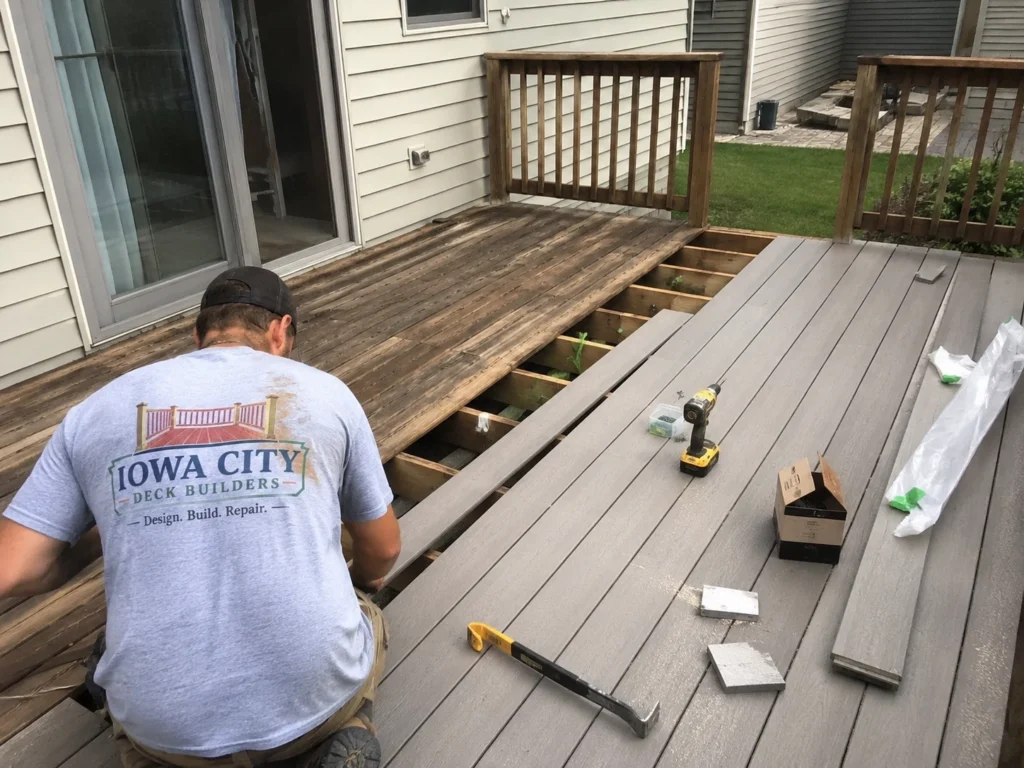
The old deck boards are normally removed so the frame can be inspected, repaired where necessary, and prepared for the selected wood or composite decking system. Resurfacing should not be used to cover hidden rot, movement, or unsafe structural conditions.
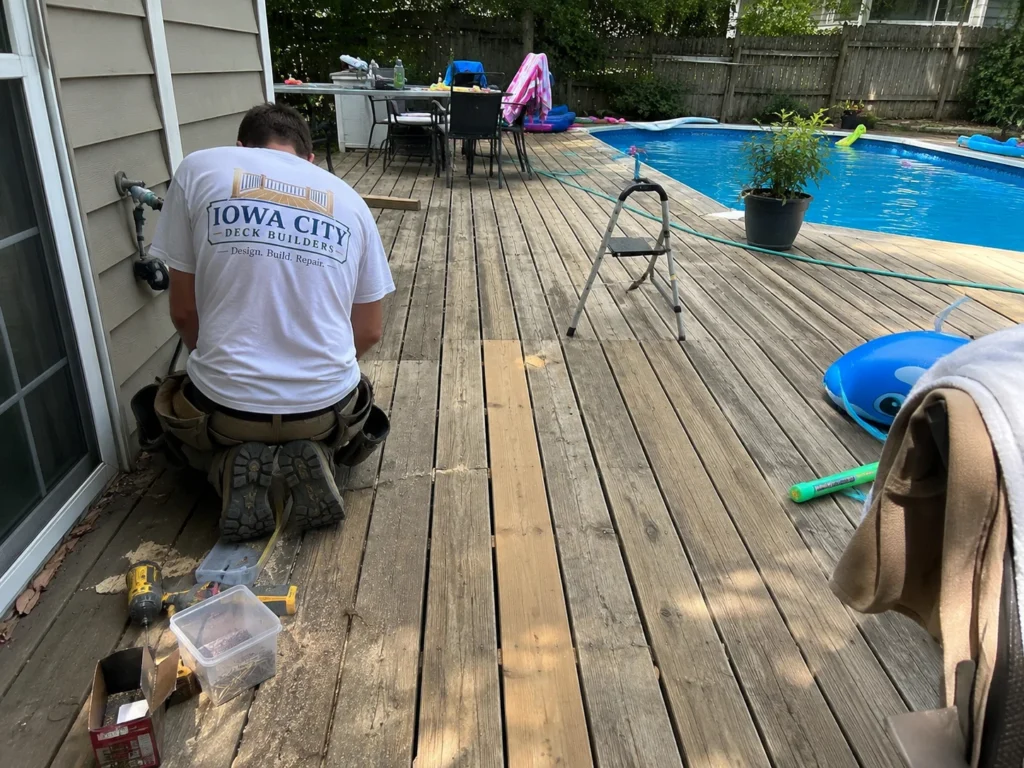
The surface material can change while the frame remains, but the selected decking must be compatible with the existing structure, joist spacing, fastener plan, stairs, railings, drainage, and finished-edge details.
Replace most or all worn deck boards with new wood decking while retaining suitable framing. This can renew the walking surface and appearance while keeping future cleaning, staining, and sealing in the maintenance plan.
Install composite decking over an existing frame only after checking framing condition, joist spacing, blocking, fasteners, stairs, railings, ventilation, and product requirements.
Remove old wood deck boards and upgrade the retained frame with composite decking, fascia, stair treads, and compatible details when the supporting structure is worth the investment.
Coordinate the new deck surface with worn stair treads, railing transitions, fascia, trim, picture-frame borders, and other visible components so the resurfaced deck looks intentional rather than partially updated.
Deck re-decking and composite resurfacing succeed only when the retained structure can support the new surface and the investment makes sense.
Check for rot, movement, undersized members, poor repairs, or support conditions that should be corrected before new boards are installed.
Review the house connection and visible water-management details before covering the frame with a renewed surface.
Confirm spacing, flatness, blocking, and edge support are compatible with the selected wood or composite deck boards.
Coordinate hidden or face-fastening requirements, fascia, picture framing, breaker boards, and board-end support.
Include the visible components and moisture paths that affect safety, appearance, ventilation, and long-term performance.
A true resurfacing project replaces most or all of the deck surface. It sits between isolated deck board replacement and complete deck replacement.
Deck resurfacing may also be described as re-decking, replacing all deck boards, wood deck resurfacing, composite deck resurfacing, or installing composite decking on an existing frame. These terms describe the same core project only when the retained structure is suitable.
The goal is not to hide an old deck under new boards. The goal is to expose and evaluate the frame, make required repairs, and install a compatible new surface that improves appearance, maintenance, and everyday use.
Use resurfacing when surface wear is widespread and replacing a few isolated boards would leave a patchwork result.
Renew the deck with wood boards when the homeowner prefers natural material and accepts the future maintenance cycle.
Upgrade to a lower-maintenance composite surface when the frame, spacing, fastening plan, stairs, and railings are suitable.
Repair or reject structural components that should not remain instead of allowing new decking to conceal rot, movement, or poor connections.
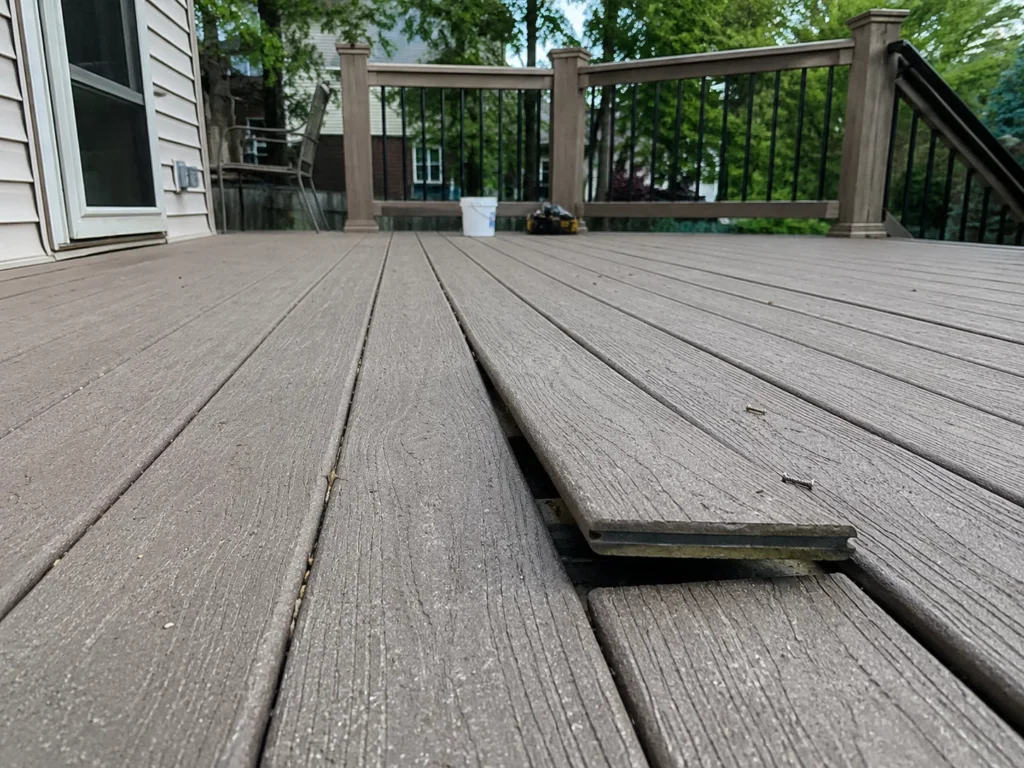
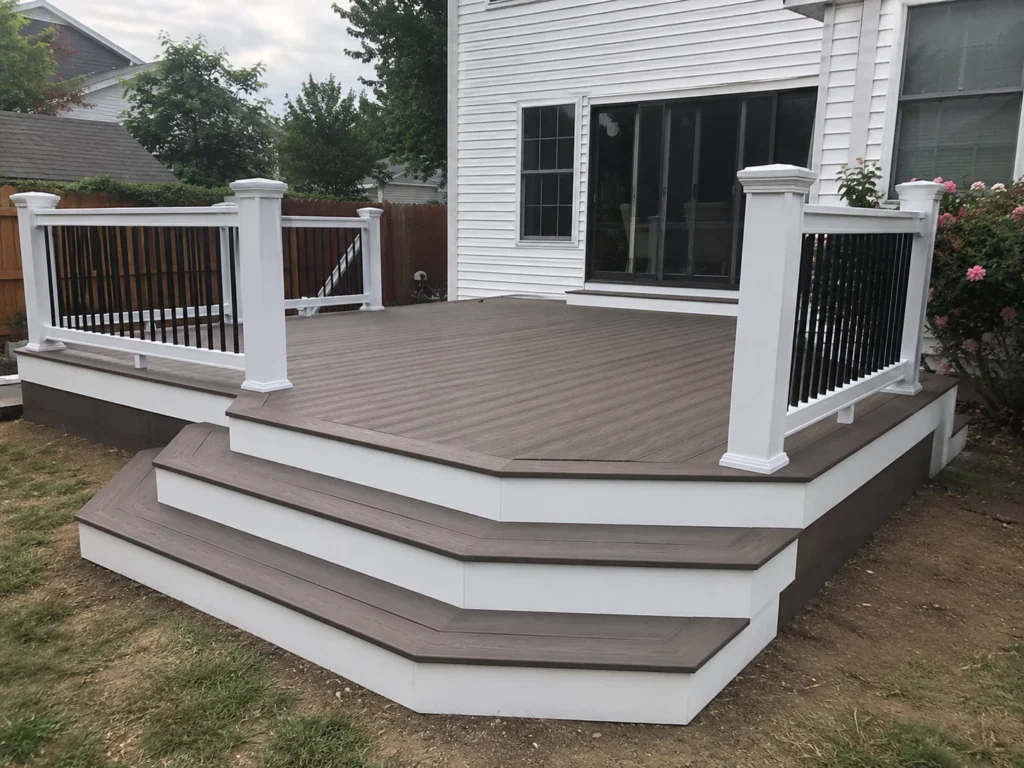
Resurfacing exposes the frame, renews the walking surface, and often coordinates stairs, railings, fascia, and transitions. These images show conditions and finished details that affect the project.
Use our interactive service map to explore approximate coverage for new deck construction, wood decks, composite decks, repair, replacement, resurfacing, stairs, railings, and related deck services throughout the Iowa City area.
We resurface existing wood and composite decks for homeowners in Iowa City and nearby Eastern Iowa communities.
Deck resurfacing removes and replaces most or all visible deck boards while retaining an existing frame that is suitable for continued use. The project may use new wood decking or compatible composite decking.
Sometimes. The old boards should be removed and the framing, joist spacing, ledger connection, supports, stairs, railings, drainage, and product requirements should be reviewed before composite decking is installed.
Yes. Wood deck resurfacing can replace a widespread worn surface while keeping a suitable frame. The homeowner should plan for the cleaning, staining, or sealing needs associated with the selected wood.
Old deck boards are generally removed so the frame can be inspected and prepared. Covering old boards can conceal rot, trap moisture, create height problems, and interfere with fastening or drainage.
Board replacement usually addresses a limited number of damaged boards. Resurfacing replaces most or all of the visible deck surface while keeping the frame. Complete replacement removes and rebuilds the structure.
Resurfacing may make sense when the frame, supports, connections, and layout are suitable to keep. Replacement is more appropriate when deterioration or movement affects the complete structure or a major redesign is needed.
Tell us what is worn, whether you are considering wood or composite, and what you want the finished deck to improve. We will help define whether resurfacing is a practical fit.