Signs Your Deck Stairs May Need Replacement
Replacement may be appropriate when several stair components are deteriorated, the stair run has shifted, or the existing layout cannot be made reliably secure with a targeted repair.

Loose, rotted, steep, sagging, or unsafe deck stairs can make the whole deck feel risky. Our team replaces worn deck stairs, damaged steps, weak stringers, unstable landings, and stair sections that no longer provide safe access to your outdoor space.
Clear scope • Practical recommendations • Respect for your home and property
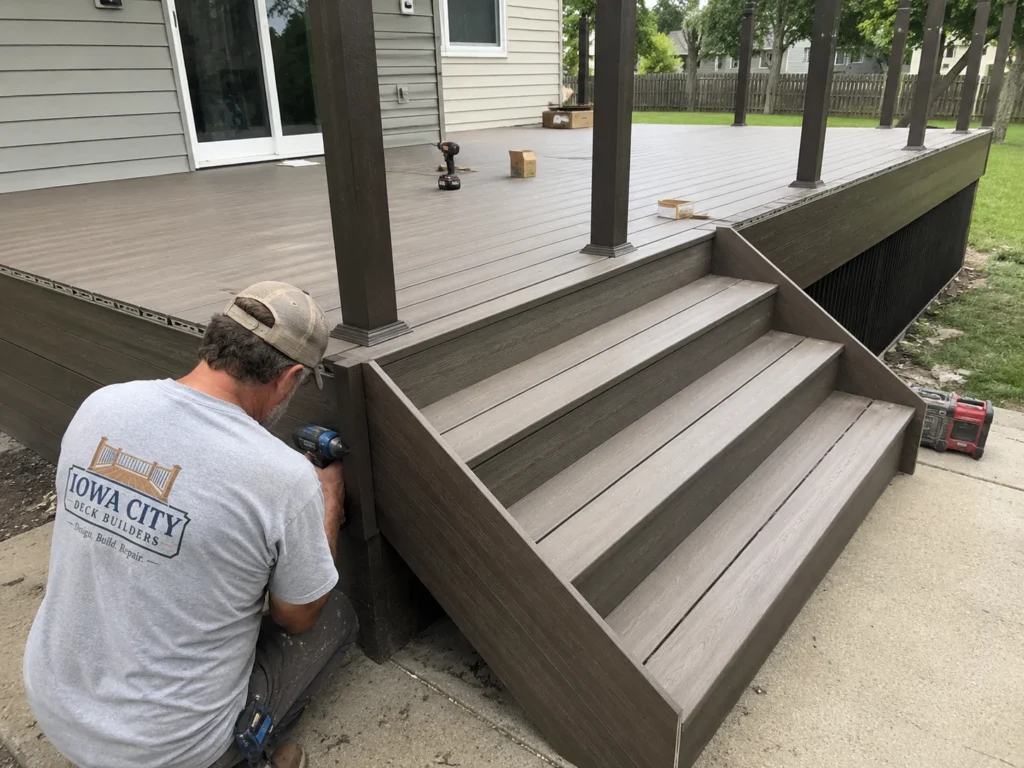
Deck stairs take a lot of abuse. They carry foot traffic, water, snow, ice, pets, furniture, grills, planters, and years of Iowa weather. When stairs start to move, sag, rot, lean, or feel uneven, they can become one of the most important repair priorities on the deck.
Sometimes the fix is simple. A few damaged treads may need replacement. Other times, the stair stringers, landing, railing posts, framing connections, or the deck structure around the stairs may need deeper repair.
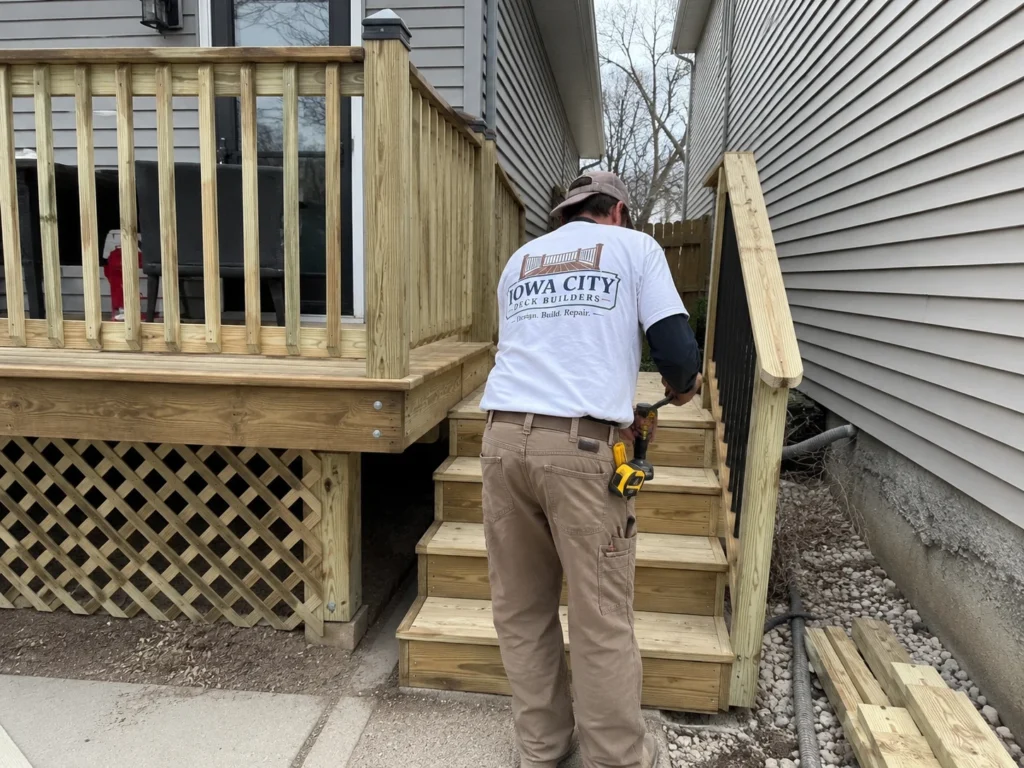
Wobble, movement, damaged treads, uneven steps, or weak connections can indicate that a limited stair repair may no longer be enough.
Replacement may be appropriate when several stair components are deteriorated, the stair run has shifted, or the existing layout cannot be made reliably secure with a targeted repair.
Not every bad step means the entire stair run needs to be rebuilt. But patching the wrong part can waste money if the main support system is already failing.
The treads are the walking boards. These may crack, cup, rot, split, loosen, or wear down over time.
Risers are the vertical pieces between steps when the stair design uses them. Damaged or missing risers can affect appearance, safety, and how finished the stairs feel.
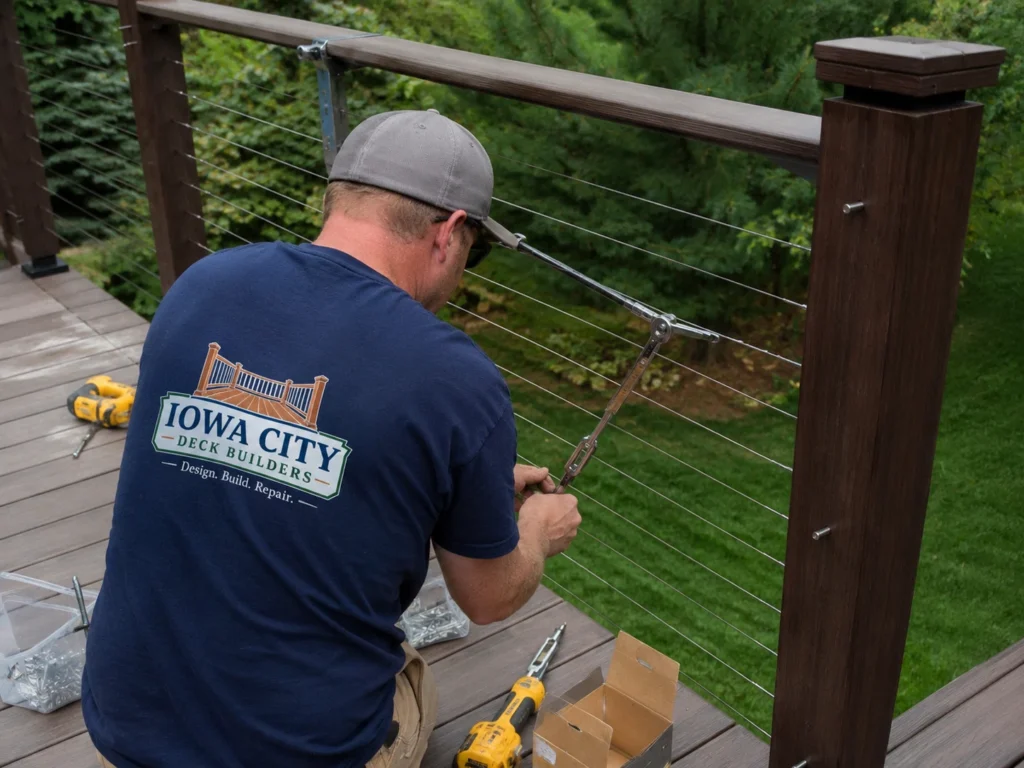
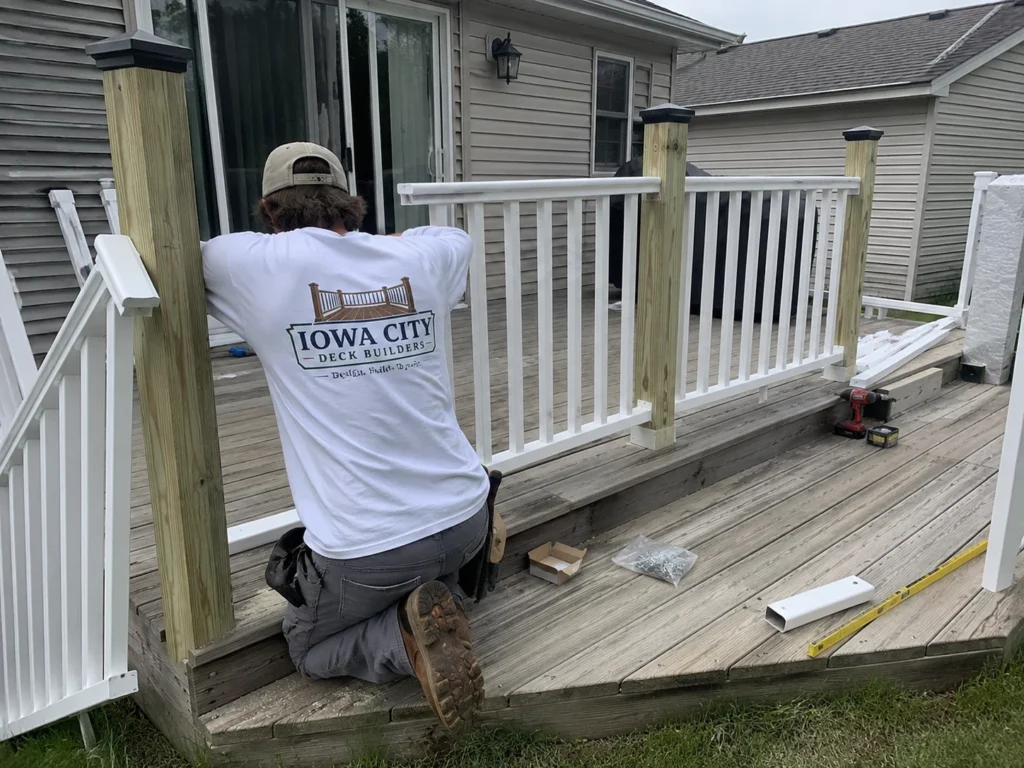
Deck stairs and railings are closely connected. When stairs are replaced, the stair railings, railing posts, handrail height, post connections, and overall stability should be reviewed too.
Deck stair replacement is more than installing new treads. Stringers, rise and run, width, landings, support, handrails, guard transitions, and the connection to the deck and ground all affect the finished stair.
A complete stair rebuild can correct steep or inconsistent steps, rotted stringers, weak landings, awkward direction, inadequate support, or access that no longer works for the yard. The new route should feel solid and comfortable in everyday use.
Complete stair replacement is appropriate when the full run, stringers, landings, support, or direction needs to change. Smaller tread repairs, railing-only work, combined stair-and-railing projects, and full deck replacement can be evaluated according to the condition of the surrounding structure.
Rebuild the main stair support when deterioration or movement affects the complete run.
Coordinate step dimensions, landing size, drainage, and material choice for a consistent route.
Improve access when the existing stairs end in an awkward, crowded, or poorly drained location.
Connect the stair rail, deck guard, posts, and landing details so the access system works together.
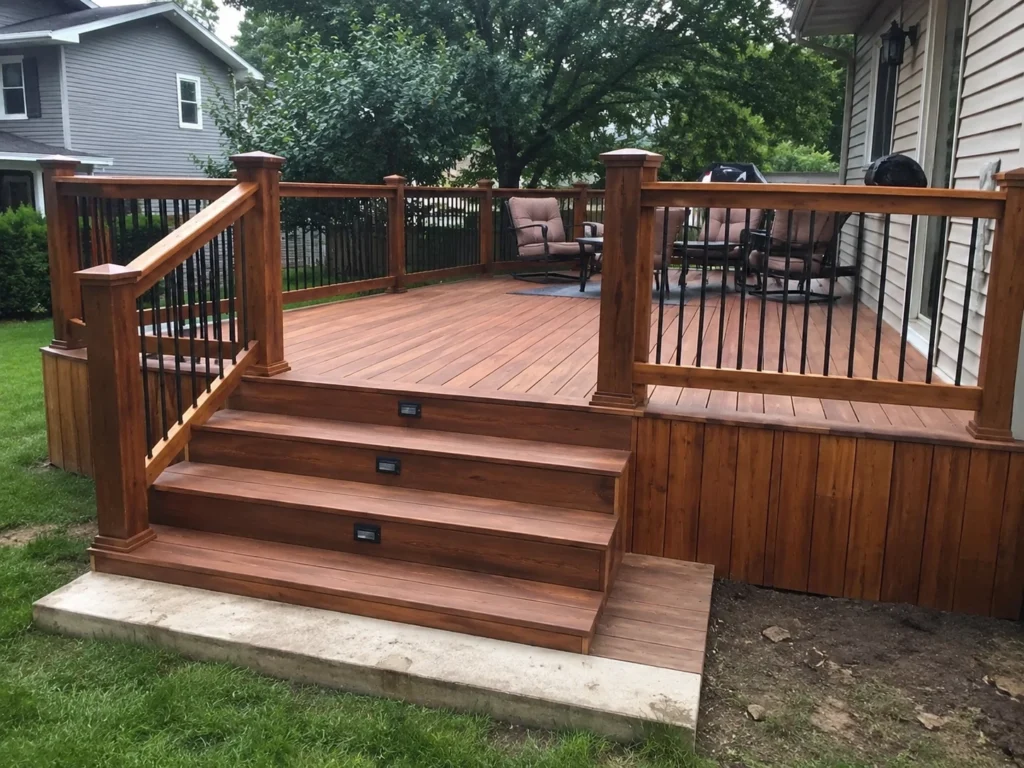
Straight, rounded, wide, and multi-run stairs all need dependable support and comfortable transitions at the deck and ground.
Use our interactive service map to explore approximate coverage for new deck construction, wood decks, composite decks, repair, replacement, resurfacing, stairs, railings, and related deck services throughout the Iowa City area.
We provide deck stair replacement for homeowners in Iowa City and nearby Eastern Iowa communities.
Deck stairs should be evaluated for replacement when they feel loose, soft, uneven, steep, sagging, rotted, cracked, or unstable. If the stringers, landing, railing posts, or stair connections are damaged, replacing individual step boards may not be enough.
Yes, sometimes. If the main deck structure is still sound and the stair damage is isolated, the stair section may be replaced without rebuilding the entire deck. If the surrounding framing is also failing, a larger repair or replacement may be needed.
Stringers are the angled support boards under the stair treads. They carry the weight of the stairs and help create the step shape. If stringers are rotted, cracked, sagging, or poorly supported, the stair system may need replacement.
Sometimes. Loose stairs may be caused by bad fasteners, weak connections, damaged stringers, loose railing posts, or landing issues. The right repair depends on what is causing the movement.
Yes, if the stairs or stair framing are worn, rotted, unsafe, or not suitable for the new decking material. Stair structure should be checked before resurfacing so the finished project is safe and complete.
Sometimes. Composite stair treads may be an option if the stair framing is suitable for the product being used. Weak, rotted, or poorly spaced stair framing should be corrected before composite materials are installed.
Tell us what feels loose, steep, uneven, rotted, or awkward about the current stairs and landing.