When a Ground-Level Deck May Make Sense
This layout often works well for low door thresholds, flatter yards, patio alternatives, and spaces where easy movement between the home, deck, and lawn matters more than elevation.

A ground-level deck can create a comfortable outdoor living space without the height, stairs, and heavy elevated structure of a raised deck. We help homeowners and nearby areas design, build, repair, resurface, and replace ground-level decks that fit the home, yard, and everyday use.
Clear scope • Practical recommendations • Respect for your home and property
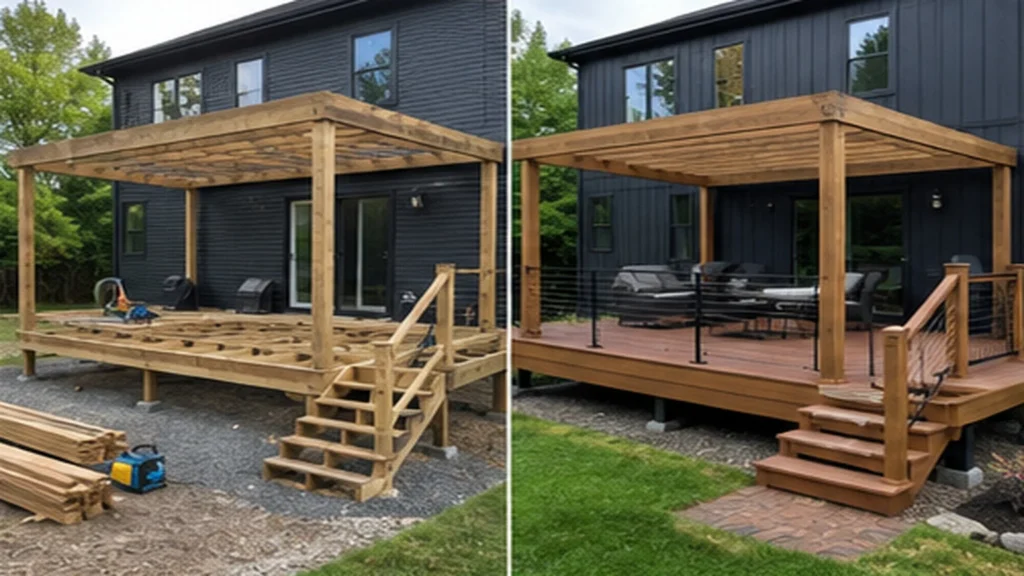
A ground-level deck is a lower deck that sits close to the ground compared to a raised deck. It may connect to a back door, patio area, walkway, side yard, garden space, or outdoor seating area. Some homeowners think of these as low decks, platform decks, backyard decks, or floating-style decks depending on the design.
Even though ground-level decks are lower than raised decks, they still need thoughtful planning. Moisture, airflow, framing, surface material, drainage, board spacing, steps, edges, and long-term maintenance all matter.
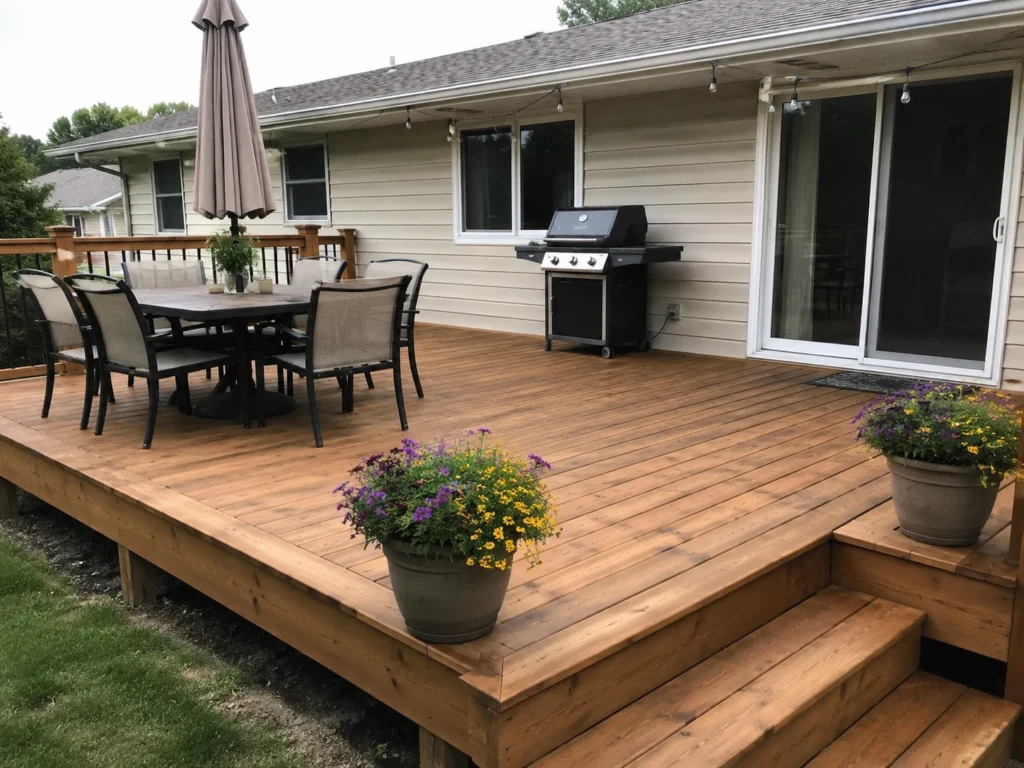
Ground-level decks can create comfortable outdoor space with simple access when the home and yard do not require a tall elevated structure.
This layout often works well for low door thresholds, flatter yards, patio alternatives, and spaces where easy movement between the home, deck, and lawn matters more than elevation.
A clean, usable outdoor surface for seating, grilling, and everyday use without a complex elevated structure.
A low deck designed to connect with an existing patio, walkway, or hardscape area for smoother indoor-outdoor flow.
Replacement for an older ground-level deck that is worn, soft, uneven, splintered, poorly built, or no longer useful.
Ground-level decks sit closer to the soil, grass, landscaping, patios, and drainage patterns. That makes moisture planning especially important. A poorly planned low deck can trap moisture, reduce airflow, collect debris, and wear out faster than expected. This is especially important for wood decks, but composite deck systems also need proper planning.
Ground-level decks provide a defined outdoor surface close to grade without the height and long stair runs of an elevated deck.
A low deck still needs careful planning around the exterior door, finished height, soil and grade, drainage, airflow, framing clearance, and transitions into the lawn. Those details help prevent a platform deck from trapping moisture or feeling disconnected from the home.
This service focuses on new low-profile and ground-level deck construction. Raised decks, patios, resurfacing, and extensions of an existing deck involve different structural, drainage, or site considerations.
Build a low outdoor platform for seating, grilling, dining, and direct movement into the yard.
Create a deck that is positioned independently when attachment to the house is unnecessary or impractical.
Coordinate the deck height, threshold transition, step-down, and door clearance for comfortable access.
Plan soil clearance, water paths, ventilation, and framing protection where the structure sits near the ground.
A well-proportioned platform deck creates an outdoor room without the visual weight of a tall structure.
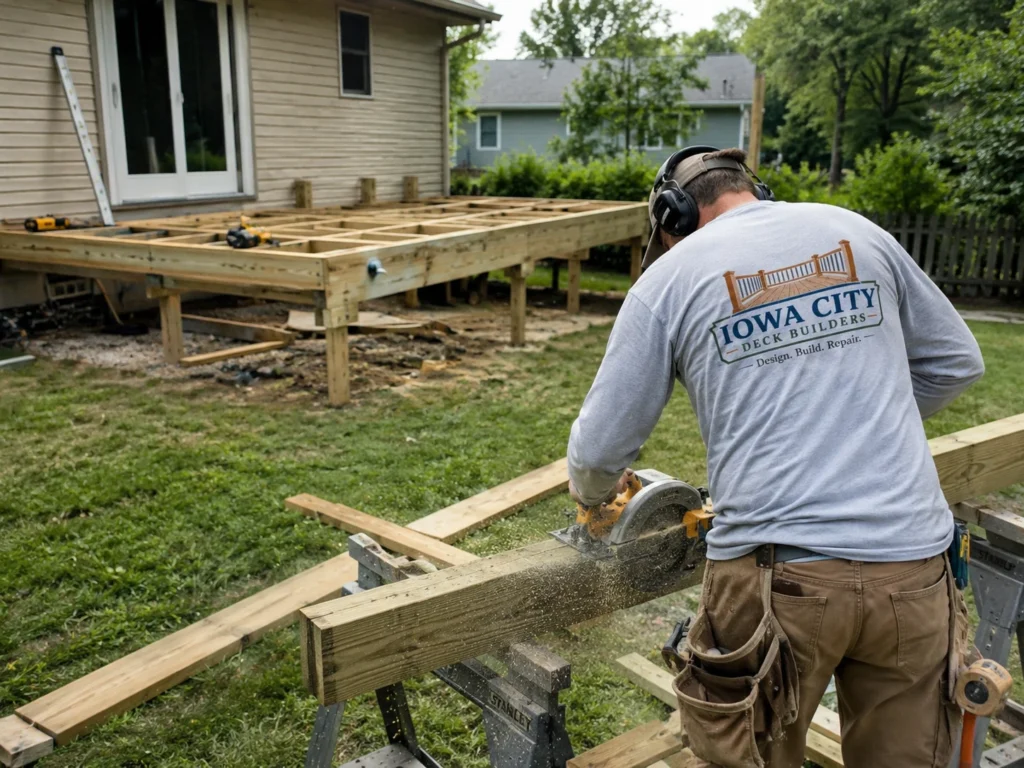
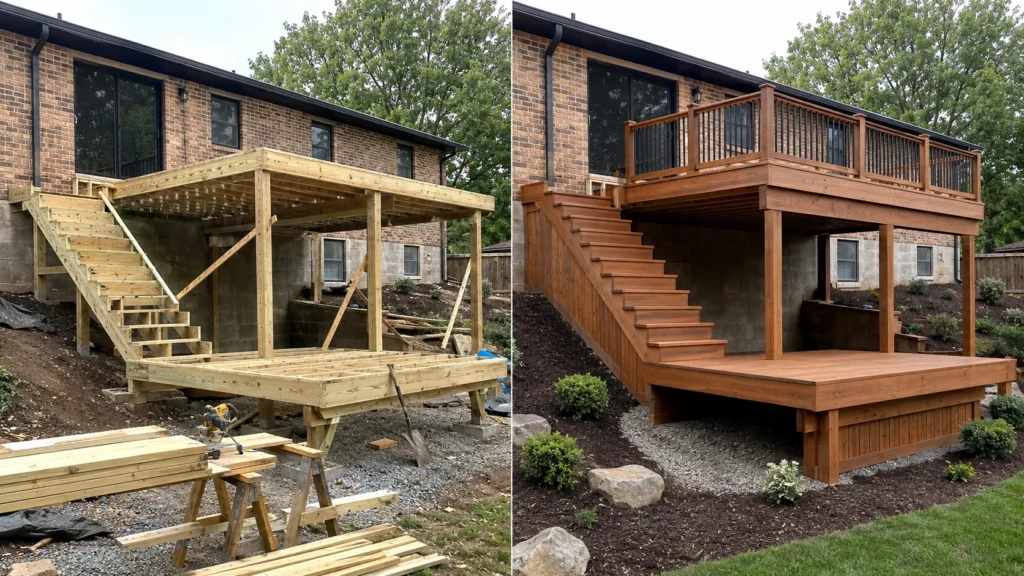
Use our interactive service map to explore approximate coverage for new deck construction, wood decks, composite decks, repair, replacement, resurfacing, stairs, railings, and related deck services throughout the Iowa City area.
We provide ground-level decks for homeowners in Iowa City and nearby Eastern Iowa communities.
A ground-level deck is a lower deck that sits close to the ground instead of being built high above the yard. It may be used for seating, grilling, patio-style outdoor living, or creating a better transition from the home to the backyard.
Not always. Some people use the term floating deck to describe certain low deck styles, but the right structure depends on the home, yard, soil, drainage, and project goals. We can help determine what type of low deck makes sense.
Yes, composite decking can be used for some ground-level deck projects when the structure, airflow, drainage, and installation details are planned correctly. Composite still needs proper framing and site preparation.
Both can work. Wood may be a practical choice for a traditional look and lower upfront material cost. Composite may be better for homeowners who want lower surface maintenance. Ground-level decks need special attention to moisture, airflow, and drainage either way.
Not always. Some ground-level decks may not need full railings depending on height and layout. However, steps, edges, transitions, and safety should still be planned carefully. Some homeowners may choose wood, aluminum, vinyl, cable, or composite-friendly railing systems for appearance or function.
Sometimes. If the framing is still solid and moisture has not damaged the structure, resurfacing may be possible. If the frame is rotted, uneven, or poorly built, replacement may be the smarter long-term option.
We can help size the platform, choose the material, and plan the transitions around the home, yard, and everyday use.