Signs Your Deck Needs Spring Repair
Spring warning signs include new softness, movement, unevenness, cracking, or looseness that was not noticeable before winter.

Snow, ice, trapped moisture, and freeze-thaw cycles can expose weak spots in an older deck. We help homeowners evaluate winter deck damage, spring repair needs, soft boards, loose railings, stair issues, frost heave concerns, water damage, rot, and repair-versus-replacement options before the deck gets heavy use again.
Clear scope • Practical recommendations • Respect for your home and property
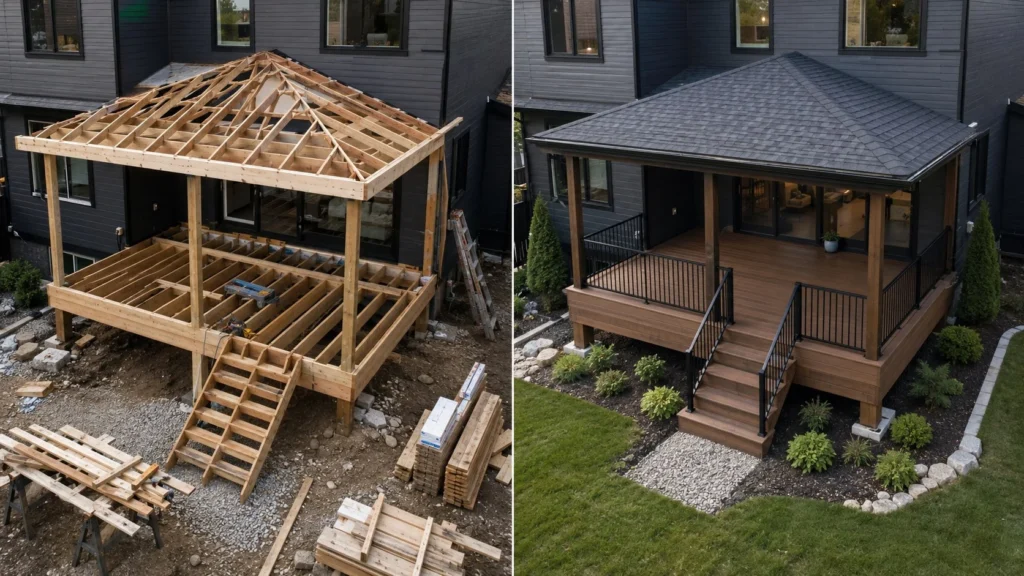
A deck may seem fine in the fall and feel completely different after a long Iowa winter. Snow, ice, melting water, freeze-thaw cycles, and trapped moisture can make existing deck problems more noticeable by spring.
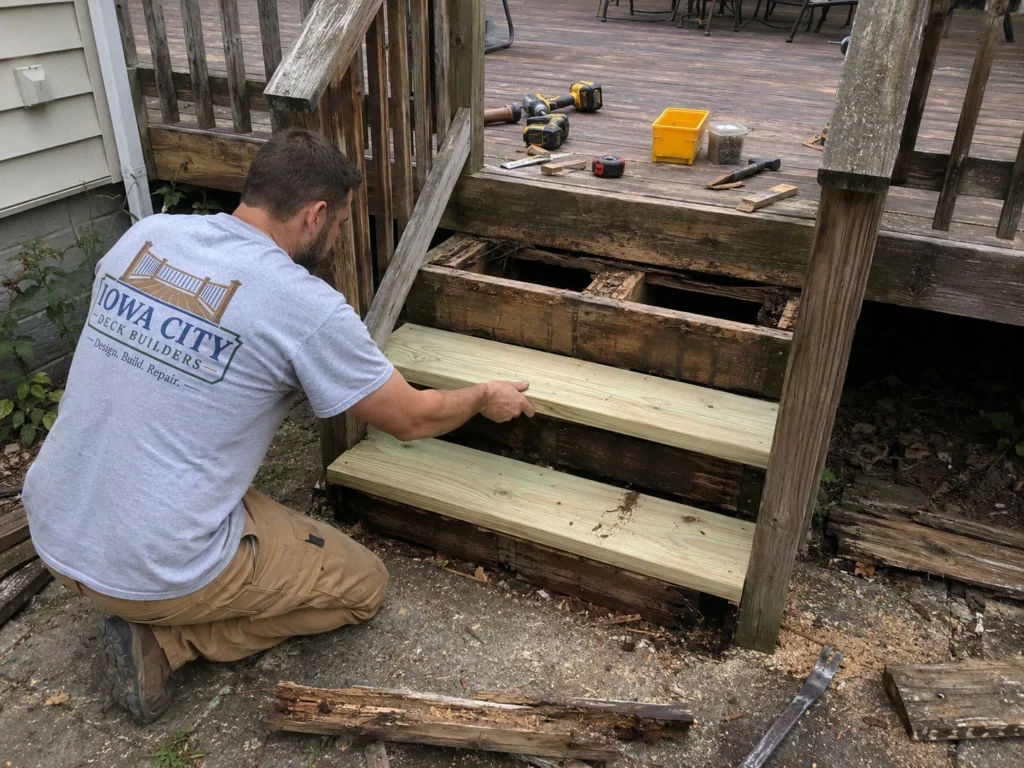
Sometimes the issue is simple: a few boards cracked, a stair tread loosened, or a railing needs attention. Other times, winter exposes deeper problems like rotted framing, shifting posts, frost heave, water damage near the ledger board, or support movement underneath the deck.
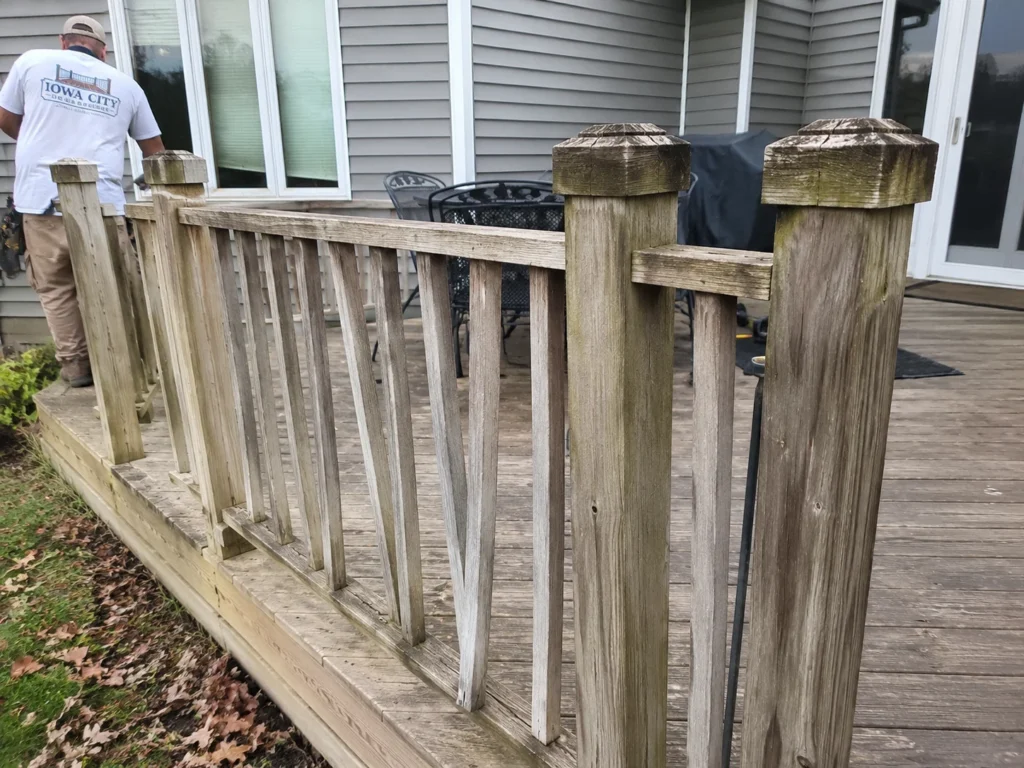
After winter, pay attention to how the deck feels underfoot and whether the stairs, railings, supports, or moisture-prone areas have changed.
Spring warning signs include new softness, movement, unevenness, cracking, or looseness that was not noticeable before winter.
Winter deck damage usually comes from moisture, freezing, thawing, movement, and existing weak spots that get worse over time. Winter does not always create a new problem from scratch. Often, it makes existing rot, weak fasteners, or poor drainage more obvious.
Frost heave and seasonal soil movement can affect outdoor structures in Iowa. If posts, footings, stairs, or support points shift, the deck may start to slope, lean, bounce, or pull out of alignment.
Stairs and railings are safety-critical areas, especially after winter. Snow, ice, moisture, and movement can make weak connections more noticeable in spring.
Seasonal soil movement can show up as changes in level, alignment, stair contact, or railing position. Those shifts deserve closer review before the deck returns to heavy use.
Winter conditions can expose deck weaknesses through frost heave, trapped snow and moisture, ice buildup, fastener movement, split boards, shifted stairs, and railings that feel loose when spring use begins.
A seasonal review should separate cosmetic weathering from structural movement or damage that affects safe use. Footings, posts, stairs, railings, boards, connections, drainage, and the house attachment can respond differently after repeated freezing and thawing.
Winter-related repair focuses on damage caused or revealed by snow, ice, moisture, and freeze-thaw movement. General wear, isolated footing problems, year-round water damage, and routine cleaning or staining may require a different evaluation.
Check decks that became uneven, lifted, or shifted after the ground froze and thawed.
Repair material damage and movement caused or revealed by moisture, cold, and seasonal expansion.
Correct loose, tilted, cracked, or unstable access components before heavy spring and summer use.
Identify safety concerns first, then plan cosmetic and maintenance work after the deck is structurally dependable.
Weathered boards, shifted stairs, loose rails, and changing support alignment can become more visible after snow and freeze-thaw cycles.
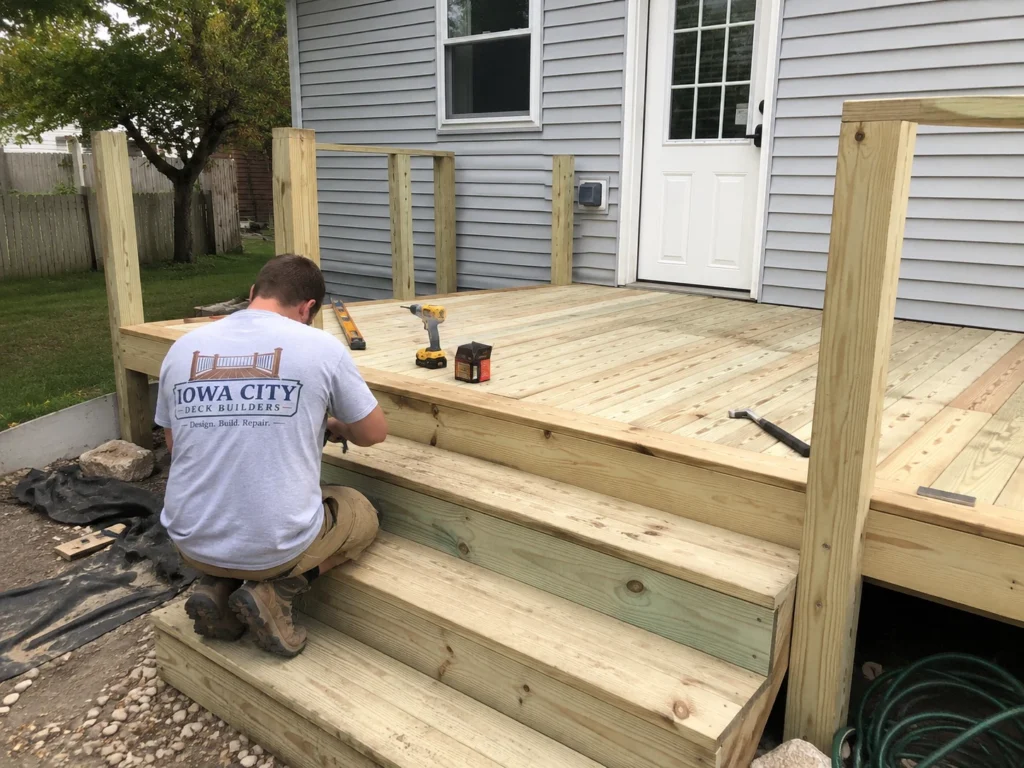
Use our interactive service map to explore approximate coverage for new deck construction, wood decks, composite decks, repair, replacement, resurfacing, stairs, railings, and related deck services throughout the Iowa City area.
We provide winter deck damage repair for homeowners in Iowa City and nearby Eastern Iowa communities.
After winter, check for soft boards, loose railings, unstable stairs, rot, water stains, shifting posts, sagging areas, gaps near the house, cracked boards, and any part of the deck that feels different or unsafe.
Yes. Snow, ice, trapped moisture, and freeze-thaw cycles can worsen cracks, rot, soft boards, stair issues, railing movement, support movement, and water damage over time.
Freeze-thaw deck damage happens when moisture enters wood, cracks, fastener holes, soil, or support areas and then freezes and expands. Repeated cycles can worsen existing weak spots.
Yes. Frost heave and soil movement can affect deck supports, especially if drainage is poor, footings are shallow, or support areas are already compromised.
Only after the deck is evaluated for damage. Staining or resurfacing should not cover soft boards, rotted framing, loose railings, unsafe stairs, ledger issues, or support movement.
They can be. Loose railings may be caused by weak posts, rotted blocking, damaged fasteners, soft deck boards, or structural movement. They should be reviewed before heavy use.
Request a spring evaluation before resurfacing, staining, or returning the deck to heavy everyday use.