Joists
Horizontal framing boards that support the deck surface.
A deck can look fine on the surface and still have serious problems underneath. Soft spots, sagging areas, loose railings, leaning stairs, rotted posts, weak beams, damaged joists, or a failing ledger board can all point to deeper structural issues. Our team provides deck framing and structural repair services for homeowners throughout Iowa City and nearby communities.
Clear scope • Practical recommendations • Respect for your home and property
Deck surface problems are easy to notice. Structural problems can be harder to see, but they matter more.
A few bad deck boards may be a simple repair. But if the framing underneath is rotted, undersized, loose, sagging, or pulling away from the house, the deck may need more serious attention.
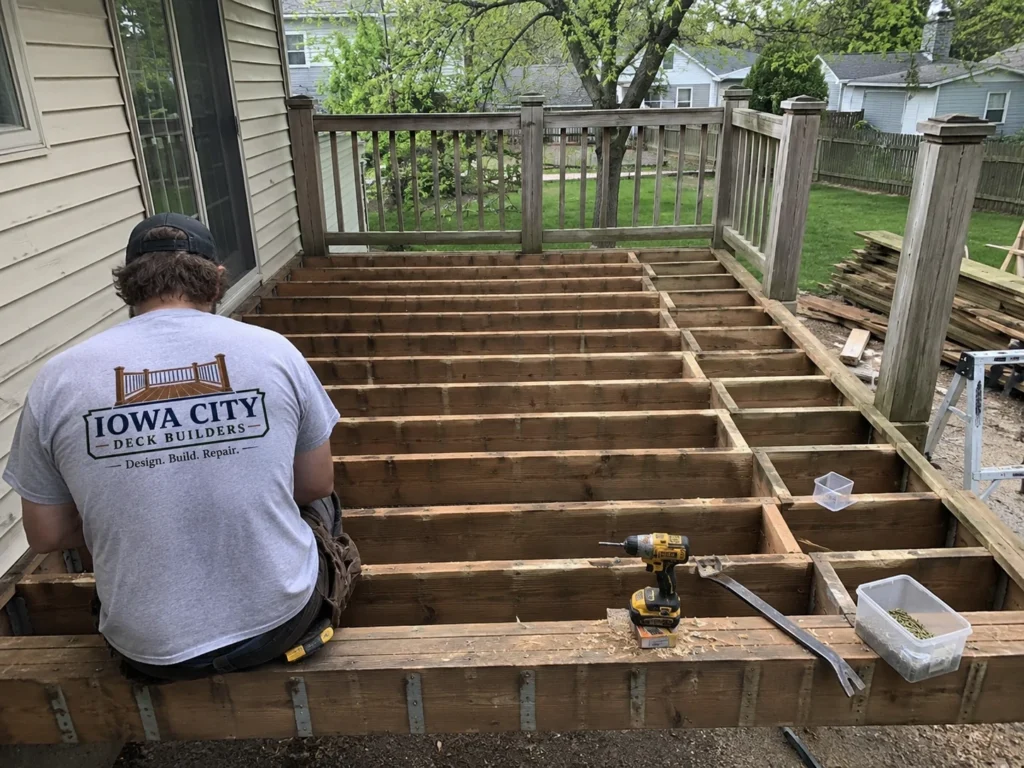
Deck framing is the support system underneath the deck surface. It includes the parts that hold the deck up, connect it to the home, support the stairs, and keep the railing system stable.
Horizontal framing boards that support the deck surface.
Larger support members that carry the joists.
Vertical supports that transfer deck weight down to the ground or footings.
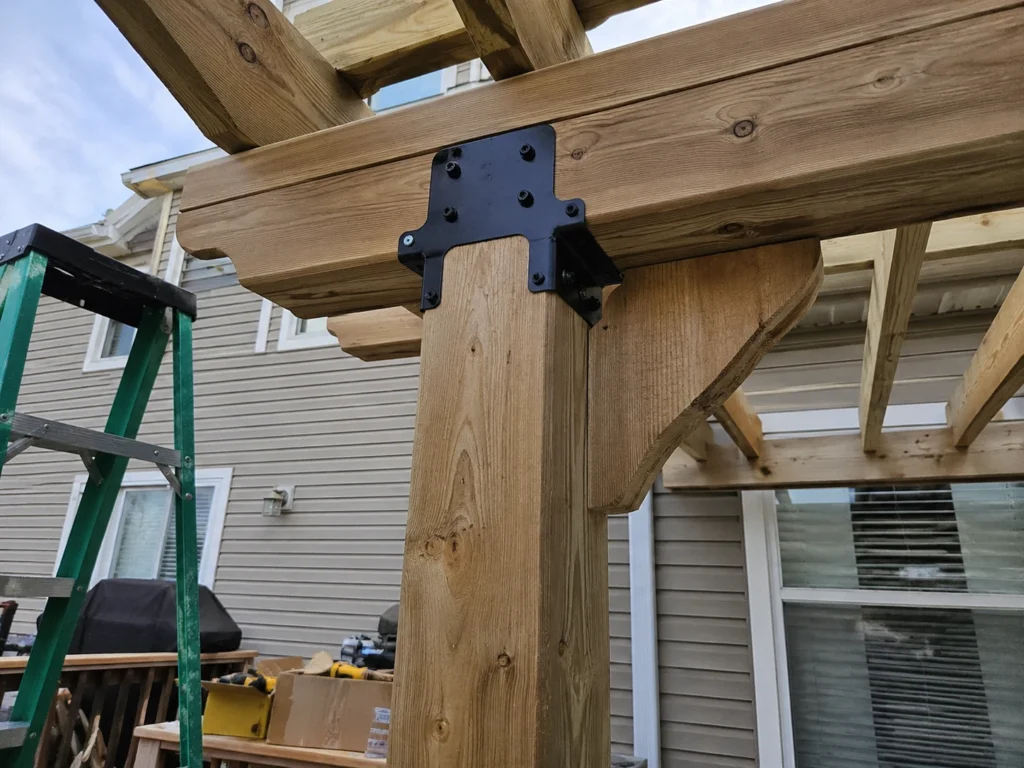
The board that connects the deck to the house.
Many homeowners want to replace deck boards, upgrade railings, switch to composite decking, or improve the look of the deck. But before investing in visible upgrades, the structure underneath should be considered.
Broad structural deck repair focuses on how loads move through the framing, connections, posts, beams, and supports—not only on what is visible at the surface.
Symptoms such as bounce, sagging, leaning, uneven decking, movement at the house, or shifting stairs can come from more than one structural issue. A complete framing review helps identify whether the concern is isolated or spread across several parts of the support system.
When one component clearly defines the problem, the repair can focus on the affected joist, beam, post, ledger, or footing. When movement or deterioration involves several components, a broader structural diagnosis helps establish the complete repair scope.
Review joist spans, beam support, connections, and damaged members that allow excessive movement.
Identify whether posts, beams, bracing, or ground support are contributing to an unstable deck.
Check the house connection and the surrounding load path when movement appears near the ledger or outer frame.
Determine whether defined framing repairs can restore dependable support or whether the deck has reached the point of a complete rebuild.
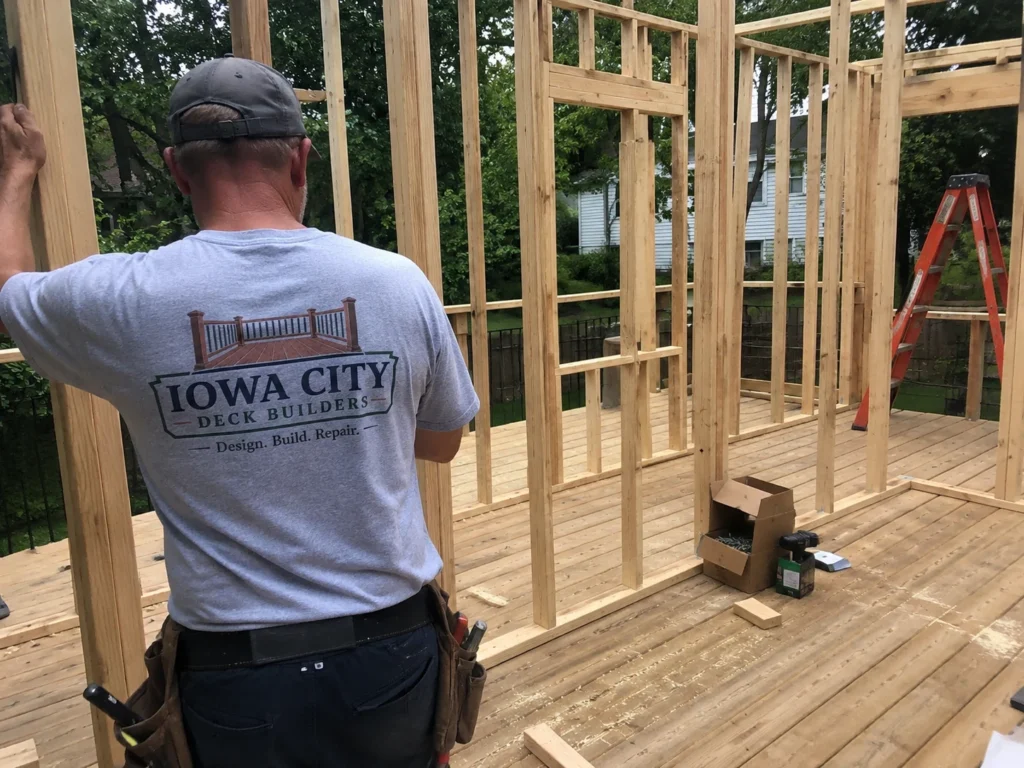
Exposed framing, hardware, supports, and house connections often reveal why a deck has started to move or feel unreliable.
Use our interactive service map to explore approximate coverage for new deck construction, wood decks, composite decks, repair, replacement, resurfacing, stairs, railings, and related deck services throughout the Iowa City area.
We provide deck framing and structural repair for homeowners in Iowa City and nearby Eastern Iowa communities.
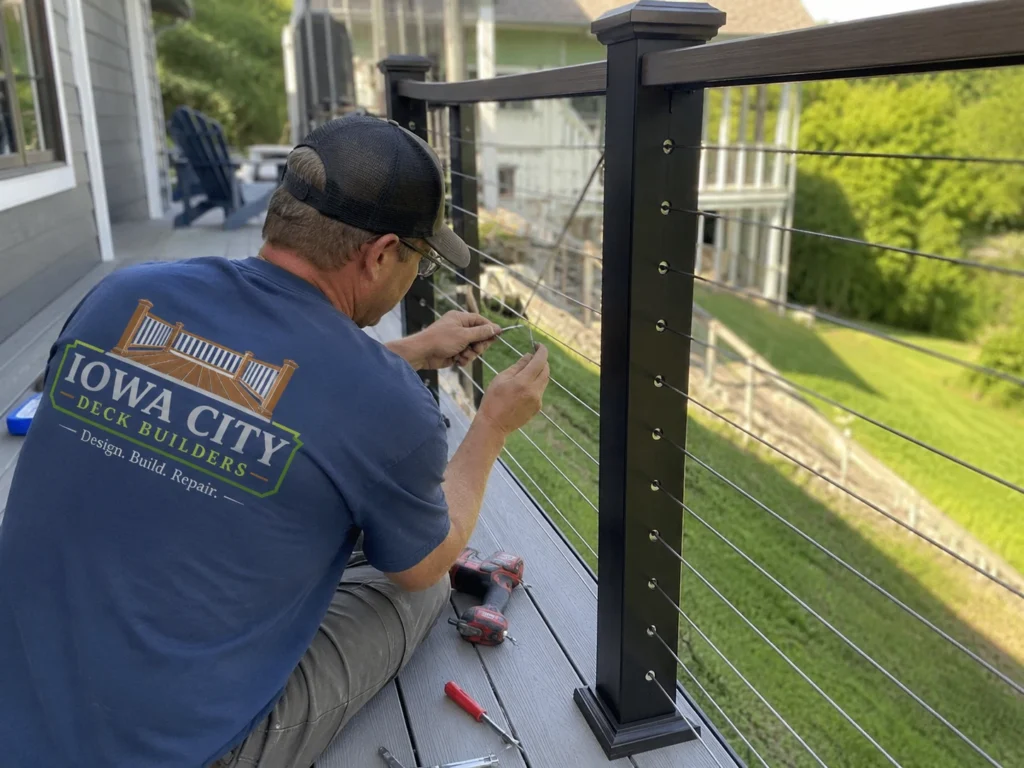
Common signs include sagging, bouncing, soft spots, loose railings, leaning posts, rotted framing, stairs pulling away, movement when walking, or visible damage underneath the deck. Some structural problems are not obvious from the surface, so it is worth having the deck reviewed if it feels unsafe or unstable.
Yes, some deck framing can be repaired if the damage is limited and the rest of the structure is still solid. Joists, beams, posts, blocking, bracing, stairs, and railing support areas may be repairable depending on the condition. If damage is widespread, replacement may be a better long-term choice.
A ledger board is the board that connects the deck to the house. It is an important structural part of many decks. If the ledger area has rot, water damage, poor flashing, or weak attachment, the deck may need careful repair or replacement planning.
Only if the old framing is strong enough. New deck boards or composite decking should not be installed over rotted, sagging, undersized, or unsafe framing. The structure should be reviewed before resurfacing an older deck.
Sometimes. A sagging deck may be caused by damaged joists, weak beams, shifting posts, poor support, or other structural issues. The repair depends on why the deck is sagging and how much of the structure is affected.
Yes, depending on the structure. Adding stairs, replacing railings, or upgrading to cable railings, aluminum railings, or vinyl railings may require stronger support. The deck framing should be reviewed before those upgrades are installed.
Request an evaluation before covering the problem with new boards, railings, or finish materials.